19 Vegetable Garden Layout Ideas for a Beautiful and Productive Growing Space
The right vegetable garden layout can make growing food more productive, attractive, and enjoyable.
Whether you have a large backyard, a narrow side yard, or only a sunny patio, thoughtful planning helps you use available space efficiently while giving every crop the light, water, airflow, and room it needs.
Explore these vegetable garden layouts for practical inspiration, including raised beds, container arrangements, vertical growing ideas, and easy-to-maintain designs.
1. Classic Raised-Bed Vegetable Garden Layout

A classic raised-bed vegetable garden layout uses several neat rectangular beds arranged in parallel lines or a balanced grid. Wooden or galvanized borders define each growing area, while paths between the beds keep the garden tidy and make watering, weeding, and harvesting easier.
Keep beds narrow enough to reach the center without stepping on the soil, and use consistent spacing for a polished appearance.
Assign each bed a purpose, such as salad greens, root vegetables, tomatoes, or herbs. Add trellises at the north side for climbing crops, and soften the geometric design with flowers or herbs along the edges.
This timeless arrangement works in both large backyards and compact spaces, making it one of the most adaptable Vegetable Garden Layouts.
2. Grid-Based Square-Foot Garden Layout

A grid-based square-foot garden divides a raised bed into clearly marked one-foot squares. Each square becomes a small planting zone, allowing you to grow several kinds of vegetables in a compact area without relying on long rows.
Use thin wooden strips, bamboo, or taut garden twine to create the grid, then place crops according to their mature size.
Plant larger crops, such as peppers or kale, singly in a square, while smaller crops like radishes, carrots, or onions can share a section. This layout makes spacing easier, reduces wasted ground, and keeps harvests organized.
It is especially useful for beginners, small yards, patios, and gardeners who want productive Vegetable Garden Layouts with a clean, structured look.
3. Long Rows for Efficient Vegetable Growing

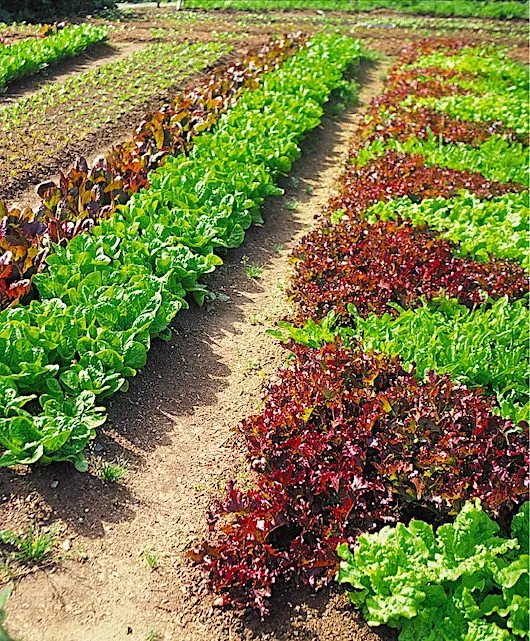
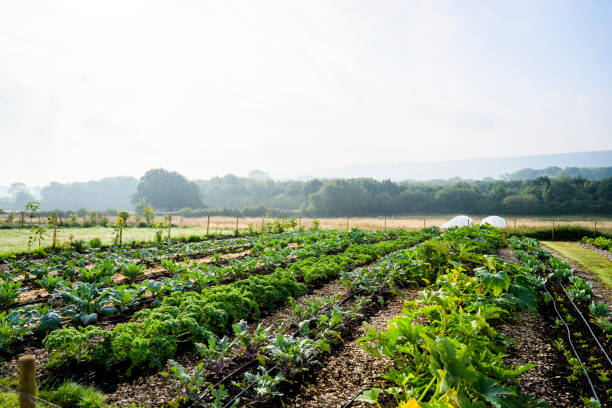
Long rows are a practical choice when you have a broad, sunny growing area and want a straightforward planting system.
Lay out parallel rows running in the same direction, leaving enough space for walking, harvesting, and moving a wheelbarrow. Group crops with similar needs together, such as a row of beans, a row of carrots, or several rows of leafy greens.
This arrangement works well for succession planting because each row can be replanted as an early crop finishes.
Keep taller crops where they will not shade shorter plants, and mark row ends with labels so the garden stays easy to manage. Although less decorative than formal beds, long rows can produce impressive harvests with simple maintenance and efficient use of space.
4. U-Shaped Garden Beds for Easy Access

U-shaped garden beds wrap growing space around three sides of a central walkway.
This layout keeps vegetables within easy reach from the inside and outside edges, so you can plant, weed, and harvest without stepping into the soil. Build the beds from wood, stone, or metal, and leave the open end facing the main path for a natural entrance.
Use the back section for taller crops or trellised cucumbers, while the side beds can hold herbs, greens, peppers, and compact root vegetables. Keep the center opening wide enough for comfortable movement and garden tools.
Besides being highly practical, a U-shaped design creates an inviting garden room and is one of the most accessible Vegetable Garden Layouts for everyday care.
5. L-Shaped Corner Vegetable Garden Layout

An L-shaped vegetable garden layout turns an awkward corner into a productive growing zone.
Build two raised beds that meet at a right angle along a fence, wall, patio, or shed, leaving enough space between the beds for comfortable access. The inside corner can hold compact crops such as lettuce, radishes, herbs, or bush beans, while the longer arms provide room for tomatoes, peppers, cucumbers, and leafy greens.
Keep taller plants toward the northern or outer edges so they do not shade shorter crops.
Add a trellis along one arm for peas or cucumbers, and use gravel, bark, or stepping stones in the surrounding paths. This layout makes excellent use of unused space while keeping watering, harvesting, and crop rotation simple.
6. Keyhole Garden Design for Small Spaces

A keyhole garden design is a smart choice when space is limited but you still want an abundant vegetable garden. Create a circular raised bed with a narrow wedge-shaped opening leading toward the center.
This notch lets you reach the interior planting areas without stepping into the soil, making the garden easy to water, weed, and harvest from a small footprint.
Place a compost basket or wire cylinder in the center so kitchen scraps and plant material can gradually feed the surrounding soil.
Plant herbs, salad greens, carrots, onions, beans, and compact tomatoes around the ring. Use stones, bricks, timber, or recycled materials for the outer wall, and keep the bed narrow enough that every crop remains within arm’s reach.
7. Circular Vegetable Garden with a Central Path

A circular vegetable garden with a central path brings strong visual structure to an open yard.
Mark out a large circle, then divide it into curved or wedge-shaped planting beds with a path running from the entrance toward the middle. The path can end at a central bed, trellis, herb spiral, or small focal feature, creating an inviting route through the garden.
Use the outer beds for sprawling crops such as squash, cucumbers, and melons, while the inner sections suit herbs, greens, carrots, beets, and compact peppers.
Keep paths wide enough for a wheelbarrow and line them with gravel, wood chips, or brick. The rounded design softens straight property lines while making every section easy to reach.
8. Four-Square Crop Rotation Garden Layout

A four-square crop rotation garden layout divides the growing area into four equal beds separated by a cross-shaped path. Assign each square to a different crop group, such as leafy vegetables, legumes, roots, and fruiting crops.
This creates a tidy, traditional design while making it easier to remember where each plant family belongs from season to season.
Rotate the crop groups clockwise each year so the same family does not occupy the same bed repeatedly. Use low edging, brick paths, or narrow gravel walkways to emphasize the four sections and improve access.
Add herbs or flowers at the center intersection for pollinators and visual interest. The organized structure works equally well in a small backyard garden or a larger formal kitchen garden.
9. Companion Planting Layout for Vegetables and Herbs

Build this layout around plant partnerships that make the bed both useful and attractive. Place tall tomatoes toward the north side, then weave basil, parsley, chives, and marigolds between them.
The herbs fill gaps beneath larger plants while their flowers and fragrance bring extra interest to the vegetable rows.
Use blocks or repeating patterns instead of scattering every crop randomly. For example, alternate tomatoes and basil along one row, border carrots with chives, and tuck dill near leafy greens.
Leave enough room for airflow, harvesting, and watering, especially where vigorous vegetables can quickly overwhelm smaller herbs.
10. Pollinator-Friendly Vegetable Garden Design

Make pollinators part of the garden plan by placing flowering plants beside, between, and around food crops.
A sunny border of zinnias, bee balm, anise hyssop, rudbeckia, or asters can frame raised beds while attracting bees, butterflies, and other beneficial insects. Add dill and basil, allowing some plants to flower rather than harvesting every stem.
Keep blooms visible and accessible by using low flowers along paths and taller varieties at the back or corners.
Group plants in generous drifts so they are easy for insects to find, and include flowers that bloom at different times. The result is a colorful vegetable garden that supports pollinators without sacrificing growing space.
11. Vertical Vegetable Garden Along a Fence

Turn an unused fence line into a productive growing strip by placing a narrow bed or a row of containers directly at its base.
Install wire mesh, netting, or a simple trellis slightly in front of the fence so cucumbers, peas, pole beans, and compact squash have a secure surface to climb. This arrangement keeps vines off paths and frees valuable ground space.
Choose a fence that receives several hours of sun, and check that the support is strong enough for mature vines and fruit.
Plant shorter greens or herbs in front, where they can benefit from filtered shade without competing with the climbers above.
12. Trellis-Focused Layout for Climbing Crops

Design the entire bed around a strong central trellis or a series of aligned supports.
Place climbing beans, peas, cucumbers, and small-fruited squash along the trellis edge, then reserve the sunny front section for lettuce, radishes, carrots, or compact herbs. The vertical crops create height and structure while leaving more soil-level space for quick-growing vegetables.
Position tall supports where they will not shade shorter crops, usually along the north side of the bed.
Use separate sections for crops with different habits: fine netting suits peas, sturdy mesh supports cucumbers, and tall poles or a teepee work well for beans. Keep paths open so harvesting remains easy.
13. Narrow Side-Yard Vegetable Garden

Turn the slim strip beside your home into a productive garden by lining one or both sides with narrow raised beds.
Choose crops that stay tidy and upright, such as lettuce, spinach, herbs, bush beans, peppers, and compact tomatoes. A trellis against the fence can support climbing beans or cucumbers without blocking the walkway.
Keep the layout easy to navigate by leaving a clear central path and placing taller plants along the fence line.
Drip irrigation, mulch, and lightweight containers between the beds make maintenance easier while adding extra growing space. This approach transforms an overlooked side yard into a practical harvest zone.
14. Small Patio Container Vegetable Garden

A patio can support an impressive harvest when vegetables are grown in containers chosen for their mature size.
Use large pots or elevated planters for cherry tomatoes, peppers, eggplant, and compact bush beans, then tuck lettuce, radishes, green onions, and herbs into smaller containers. Grouping pots together creates a cohesive garden instead of a scattered collection.
Arrange containers by height, placing taller crops at the back and trailing herbs or strawberries near the edges.
Select a sunny location close to a water source, and make sure every pot has drainage holes. Matching finishes, a simple plant stand, or a narrow shelf can make the garden feel intentional and decorative.
15. Tiered Vegetable Garden for Sloped Ground

Sloped ground becomes far more useful when it is divided into a series of level growing terraces. Build short retaining edges from stone, timber, or durable landscape blocks, then create beds that follow the contours rather than allowing soil and water to wash downhill.
Keep each tier narrow enough to reach comfortably from the path or the terrace below.
Plant sun-loving crops on the upper levels and moisture-tolerant greens or herbs where runoff naturally collects. Add steps, sturdy paths, and simple irrigation lines to make harvesting safe and predictable.
A tiered design not only controls erosion but also creates a layered vegetable garden with strong visual structure.
16. In-Ground Kitchen Garden with Defined Paths

An in-ground kitchen garden feels organized and beautiful when planting beds are separated by clearly defined paths.
Mark out rectangular or geometric growing areas, then use gravel, wood chips, brick, or mown strips to create routes between them. The paths should be wide enough for harvesting baskets and wheelbarrows while keeping soil out of the beds.
Grow salad greens, root vegetables, herbs, tomatoes, and seasonal flowers in blocks rather than long, difficult-to-reach rows.
A central crossing path can divide the garden into quarters and create a strong focal point. Adding edging, trellises, or a simple gate gives the productive space the character of a formal potager.
17. Mixed Ornamental and Edible Garden Border

Blend vegetables, herbs, and flowers into one abundant border for a garden that looks decorative while producing a useful harvest.
Colorful chard, purple basil, curly kale, lettuce, and climbing beans can provide foliage contrast, while calendula, nasturtiums, cosmos, and salvias add height, color, and pollinator appeal.
Arrange taller crops toward the back, medium-height herbs and vegetables through the middle, and low-growing salad leaves along the front edge. Repeat colors and textures so the planting feels intentional rather than random.
A narrow mulch or stone path beside the border keeps harvesting convenient and protects the soil from unnecessary foot traffic.
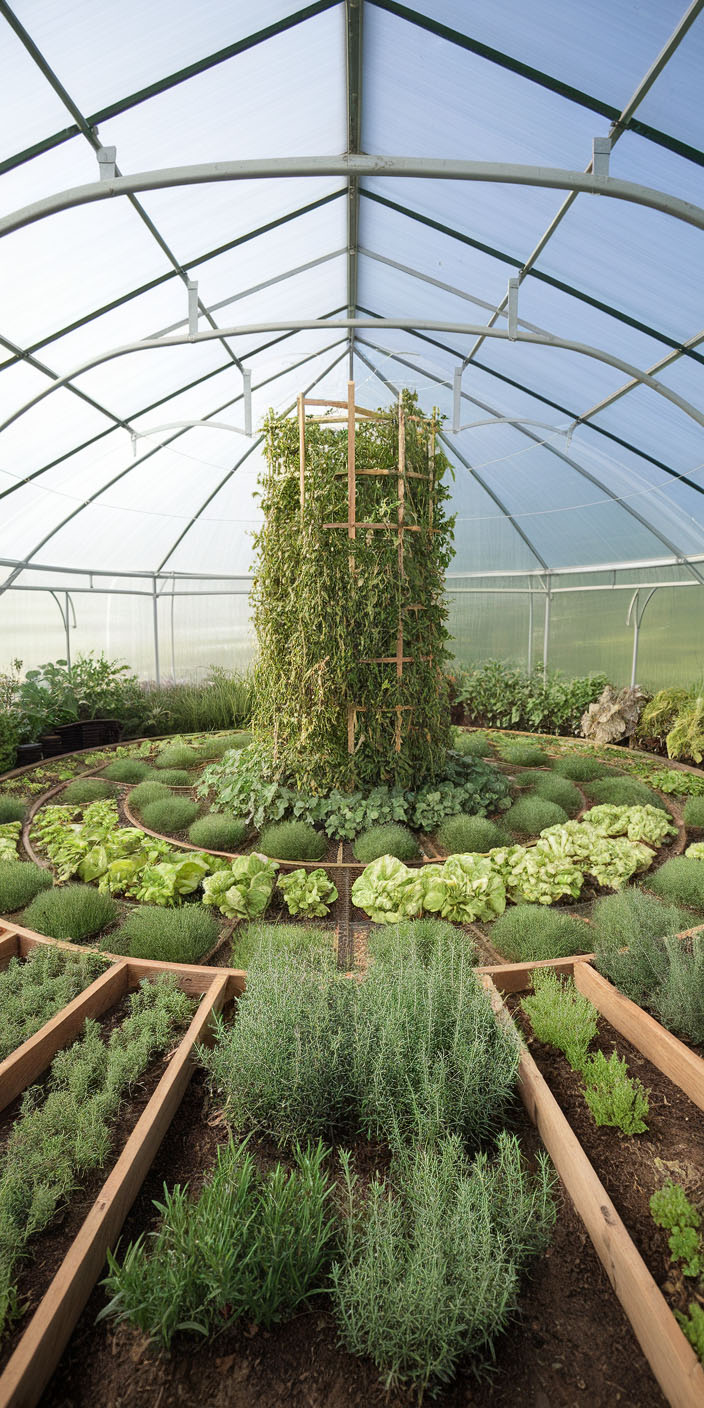
18. Greenhouse-Connected Vegetable Garden Layout

Connect the greenhouse directly to outdoor vegetable beds to create a practical growing zone for seed starting, tender crops, and everyday harvesting.
Place the structure at the end of a straight gravel or paved path, then align raised beds outside the door so seedlings can move easily from protected conditions into the garden.
Use the greenhouse for tomatoes, peppers, cucumbers, propagation, and winter storage, while outdoor beds hold leafy greens, roots, beans, and crops that need more space.
Keep the transition area uncluttered, include a staging bench or potting surface near the entrance, and plan wide enough paths for carrying trays, watering cans, and wheelbarrows.
19. Family-Friendly Vegetable Garden with Wide Paths

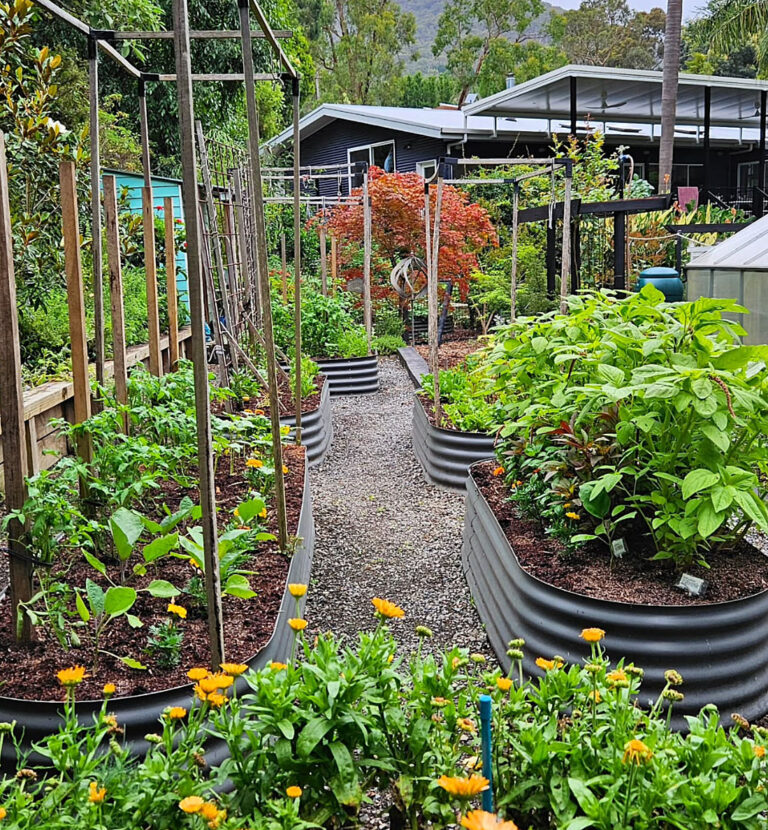
Design the vegetable garden as an inviting family space with wide, clearly defined paths between raised beds. A generous layout gives children room to move, makes wheelbarrow access easier, and reduces the risk of stepping on seedlings.
Use durable gravel, bark, brick, or smooth pavers, and keep the main route wide enough for adults and children to work side by side.
Choose sturdy raised beds with rounded or softened edges, then reserve one bed for quick crops such as peas, strawberries, cherry tomatoes, or salad leaves that children can easily harvest.
Add a small potting bench, watering station, plant labels, or a nearby seating area to encourage regular involvement while keeping the layout productive and easy to supervise.
A beautiful and productive garden starts with a layout that fits your space, growing goals, and gardening routine.
Choose a design that makes planting and harvesting convenient, then adapt it with suitable crops, sturdy supports, accessible paths, and season-long maintenance in mind. With the right vegetable garden layout, even a modest growing area can become an organized and rewarding source of fresh produce.