How to Grow Cherry Tomatoes Indoors: A Simple Guide to Fresh Tomatoes Year-Round
Growing cherry tomatoes indoors gives gardeners a cheerful way to enjoy fresh, flavorful fruit throughout the year.
With a sunny window or a simple grow-light setup, the right container, and a little daily care, even a small apartment can become a productive tomato garden.
This guide shows how an indoor grower can choose plants, create the ideal growing space, support healthy growth, and keep the harvest coming.
Choose Compact Cherry Tomato Varieties for Indoor Growing

Indoor gardeners should begin with compact, determinate, or micro-dwarf cherry tomato varieties.
Options such as Tiny Tim, Micro Tom, Red Robin, and Orange Hat stay shorter than full-size vining tomatoes, making them easier to manage beneath a grow light or on a sunny shelf. Their smaller root systems also suit containers better.
Seed packets should be checked for mature height, days to harvest, and whether the plant is suitable for containers. A variety described only as “cherry tomato” may still grow several feet tall.
Choosing a naturally compact plant reduces pruning, staking, and lighting challenges while creating a cheerful indoor crop that can produce colorful fruit in a surprisingly small space.
Select a Bright Indoor Location for Tomato Plants

A bright location gives indoor tomato plants the best natural start. A south-facing window usually provides the longest period of direct sunlight, while an unobstructed east- or west-facing window can also work.
The plant should sit close to the glass without touching a cold pane, and the area should have steady warmth away from heating vents or drafty doors.
Leaves may lean toward the window when light comes from one direction, so the container can be rotated a quarter turn every few days.
A saucer protects the sill from water, while a light-colored wall can reflect some brightness back toward the foliage. If the plant becomes tall, pale, or weak, the location needs supplemental LED lighting rather than simply more watering.
Set Up LED Grow Lights for Strong, Healthy Growth

LED grow lights help indoor cherry tomatoes stay compact, leafy, and productive when window light is weak.
A full-spectrum LED panel, bar, or shop-style fixture can be suspended above the plant so light reaches the entire canopy. The fixture should be adjustable, allowing it to move higher as the tomato grows while remaining close enough to prevent thin, stretched stems.
A simple setup can use a small wire shelf with one LED bar beneath each shelf, or a clamp-style grow light aimed directly at a single pot.
A timer keeps the schedule consistent, commonly providing a long daytime period followed by darkness. The leaves should look sturdy and green rather than bleached or curled; those signs suggest the fixture needs repositioning.
Pick the Right Container and Add Proper Drainage

Cherry tomato roots need room to support steady growth, so the final container should be broad, stable, and large enough for one plant. A pot holding roughly two gallons or more works well for many compact varieties, while larger plants may need additional space.
Plastic, glazed ceramic, or fabric containers can all work indoors if they are easy to move and sit securely.
Drainage is essential because waterlogged roots quickly cause stress and disease. The container should have several holes in the base, with a saucer underneath to catch runoff.
A lightweight, well-draining potting mix is preferable to heavy garden soil. After watering, excess moisture should flow freely from the bottom; standing water in the saucer should be emptied rather than left beneath the pot.
Use Nutrient-Rich Soil for Container Tomatoes

Successful efforts to Grow Cherry Tomatoes Indoors begin with a light, nutrient-rich container mix. Regular garden soil can become heavy and compacted indoors, so a quality potting mix works better.
A useful blend includes potting mix, finished compost, coconut coir, and perlite. The mix should hold moisture while allowing excess water to drain freely.
Each container needs drainage holes and enough room for developing roots. A compact cherry tomato may grow well in a pot holding at least five gallons. Before planting, the grower can moisten the mix and blend in a slow-release vegetable fertilizer according to the label.
As the plant flowers and produces fruit, a diluted tomato fertilizer can provide extra support without encouraging excessive leafy growth.
Plant Cherry Tomato Seeds or Transplants Correctly

Cherry tomato seeds can be started in small cells filled with sterile seed-starting mix. They should be planted about one-quarter inch deep, then kept gently moist under a bright indoor grow light.
Once seedlings develop true leaves, the strongest plants can be moved into individual pots. A timer-controlled LED light positioned close above the foliage helps prevent thin, leaning stems.
When using a transplant, the grower should loosen the root ball carefully and place the plant deeply in its new container.
Tomato stems can form additional roots below the soil line, so the lowest leaves may be removed before planting. The soil should be firmed lightly around the stem, followed by a thorough watering and immediate placement beneath the indoor lighting setup.
Maintain the Ideal Indoor Temperature and Humidity

Indoor cherry tomatoes grow best when their surroundings remain warm, bright, and stable.
A room temperature near 65–80°F during active growth gives the plant a comfortable range, while cold windows, drafts, and sudden heat from radiators can slow development. A full-spectrum LED grow light should hang above the plant, with its height adjusted as the foliage grows. A timer can provide a consistent daily light cycle.
Humidity should be moderate rather than muggy. A small digital hygrometer makes changes easier to notice, and gentle air movement from a nearby fan can discourage stagnant, damp conditions.
If the air is very dry, grouping plants or placing a water-filled pebble tray nearby may help. The tray should not leave the container sitting directly in water.
Water Indoor Cherry Tomatoes Without Overwatering

Indoor cherry tomatoes need consistent moisture, but constantly wet soil can suffocate roots and invite fungus gnats or root problems. Before watering, the grower should press a finger about an inch into the mix.
If that layer feels dry, water slowly at the base of the plant until a small amount begins to drain from the bottom holes. This deep watering is more useful than frequent surface sprinkles.
Water should be applied to the soil rather than the leaves, especially in rooms with limited airflow.
A saucer can catch runoff, but it should be emptied after watering so the pot does not remain submerged. Plants beneath strong grow lights may dry faster, while plants in dimmer areas use less water. Checking the soil regularly is more reliable than following a fixed calendar.
Feed Tomato Plants for Continuous Flowering and Fruit

Indoor cherry tomato plants use nutrients quickly once flowering begins. A diluted, water-soluble tomato fertilizer can be applied according to the product label, usually after the growing medium has been watered lightly.
A formula made for fruiting vegetables helps support flowers, developing tomatoes, and sturdy stems without encouraging excessive leafy growth.
Consistent feeding matters more than heavy feeding. The grower should watch for pale leaves, slow growth, or poor fruit development, while avoiding fertilizer buildup in the pot.
Every few weeks, plain water can be applied generously until it drains from the container, carrying away excess salts. With a full-spectrum LED grow light positioned close enough to keep growth compact, regular feeding helps an indoor plant continue flowering and producing tomatoes.
Pollinate Indoor Tomato Flowers by Hand

Indoor tomato flowers may need a little help because there are no outdoor breezes or visiting insects to move pollen. When a flower is fully open, the grower can gently tap the supporting stem or flower cluster once a day.
A small artist’s brush or cotton swab can also be touched lightly against the flower’s central parts to loosen and transfer pollen.
Pollination works best when the plant is dry and the air is not overly humid. The grower should avoid shaking the plant harshly or brushing flowers repeatedly, since delicate blossoms can drop.
A nearby fan set on low can improve airflow, while a full-spectrum grow light keeps the plant strong enough to produce new flowers. Successful pollination is followed by a swelling green tomato beneath the blossom.
Support, Prune, and Manage Indoor Tomato Vines

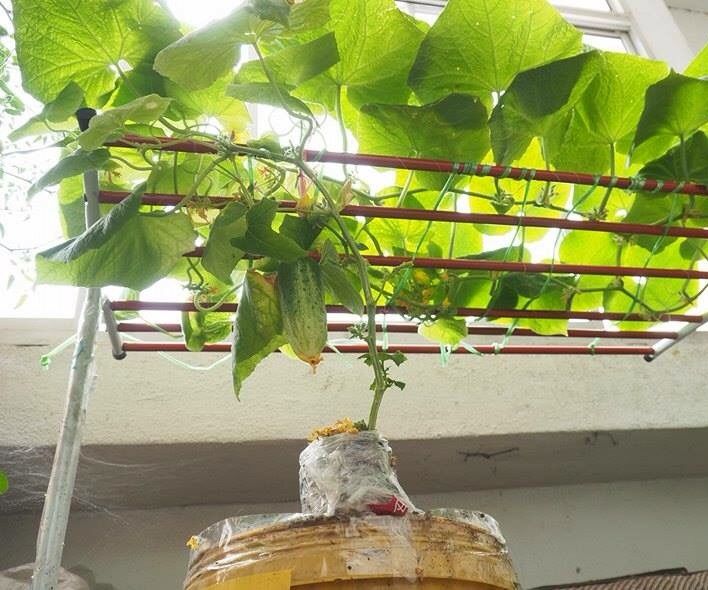
Indoor cherry tomato vines become heavy when flowers and fruit develop, so a sturdy cage, stake, or overhead string support should be installed early. Soft plant ties can guide the main stem without cutting into it.
The grower should keep the support secure and leave enough space around the plant for air movement and light from the LED fixture.
Pruning should be selective rather than severe. Yellow leaves, damaged growth, and crowded shoots can be removed with clean scissors.
For an indeterminate variety, extra side shoots may be thinned when the plant becomes too dense, while the growing tip can be trimmed if it reaches the light or ceiling. Regular turning, tying, and checking keeps the indoor vine productive without allowing it to become tangled.
Harvest Ripe Cherry Tomatoes and Keep Plants Productive

Cherry tomatoes are ready to harvest when they have developed their mature color and feel slightly full rather than hard.
The grower can pick individual fruits by gently twisting them or using clean scissors, leaving nearby green tomatoes attached to the cluster. Harvesting every day or two prevents overripe fruit from splitting and keeps the plant’s energy moving toward new flowers and developing tomatoes.
Ripe tomatoes are best enjoyed soon or stored briefly at room temperature away from direct light.
The plant should also be checked for yellow leaves, damaged fruit, and crowded stems during each harvest. Removing spent material, maintaining steady moisture, and keeping the LED grow light on a consistent schedule helps an indoor cherry tomato plant remain healthy and productive through successive waves of flowers and fruit.
With suitable light, steady care, and a little patience, an indoor grower can turn a compact space into a year-round source of sweet cherry tomatoes.
Once the first fruits appear, regular harvesting, feeding, watering, and pruning will help the plant stay productive. Growing cherry tomatoes indoors can be both practical and fun, offering fresh flavor and a rewarding gardening project in every season.