21 Beautiful Indoor Staircase Gardens That Bring Life to Every Level
Indoor staircase gardens turn an overlooked circulation area into a living feature. With the right plants, containers, lighting, and drainage strategy, the space beside a staircase can feel less like a passageway and more like a small indoor landscape.
Whether you prefer a sculptural tree, a collection of trailing plants, or a practical herb display, these ideas show how to bring greenery to every level without compromising safety or style. Always keep walking surfaces clear, protect floors from water, and choose plants suited to the available light.
1. A Lush Under-Stair Jungle

The triangular space beneath a staircase is an ideal setting for a layered indoor jungle. Combine tall palms or bird-of-paradise plants at the back with ferns, calatheas, and trailing pothos toward the front. Varying heights makes the planting feel abundant rather than crowded.
Use waterproof trays beneath every container and leave enough clearance for cleaning. A dark painted wall or natural wood backdrop can make the foliage look especially rich while visually defining the garden as a deliberate feature.
2. A Sculptural Indoor Staircase Tree

One large tree can give a staircase garden a strong focal point without requiring dozens of pots. A fiddle-leaf fig, rubber tree, olive tree, or kentia palm works well beside a landing where its canopy can rise into the open vertical space.
Choose a heavy, stable planter and rotate the tree regularly so it grows evenly. Keep the trunk and foliage away from handrails and make sure fallen leaves cannot create a slipping hazard on the stairs.
3. Trailing Plants Along a Floating Staircase

Floating stairs often leave open space between the treads, creating a light, architectural setting for trailing plants. Place pothos, string of hearts, or heartleaf philodendron on a nearby shelf or landing so the vines cascade downward without touching the walking line.
Repeat one or two plant varieties for a calm, coordinated look. Avoid placing pots on individual treads, and secure elevated containers carefully so watering and everyday movement remain safe.
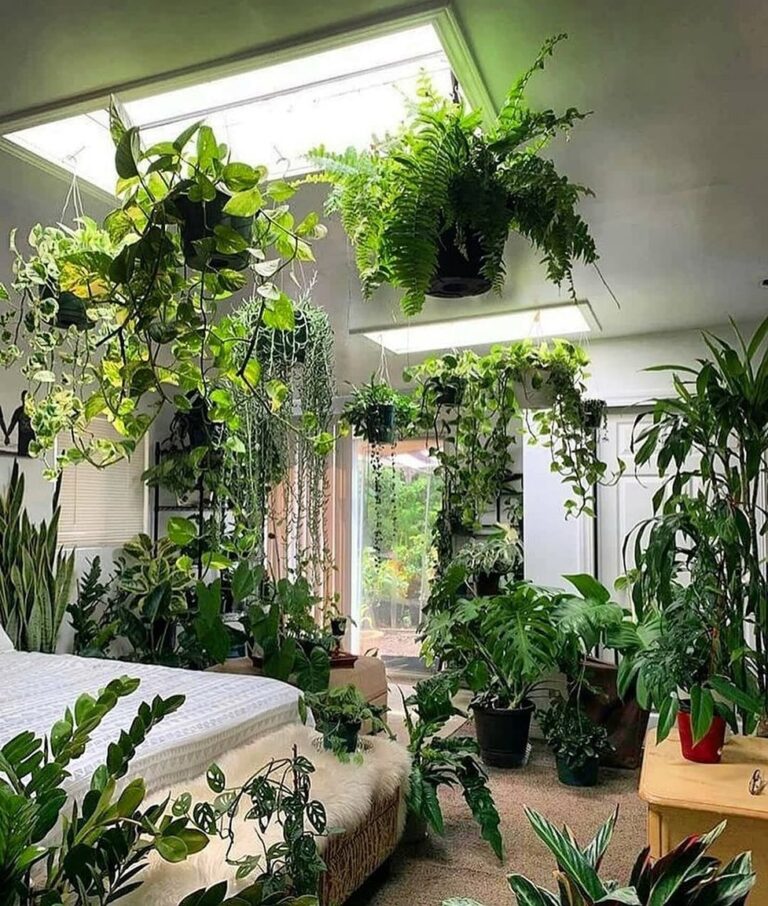
4. A Bright Stairwell Conservatory

A stairwell surrounded by skylights or tall windows can become a miniature conservatory. Use plants with similar light needs, such as palms, citrus, monstera, and climbing jasmine, and arrange them at different elevations around the landing.
Bright spaces still need careful plant selection because reflected heat near glass can scorch leaves. Sheer blinds, humidity trays, and regular rotation help maintain an even, healthy display throughout the year.
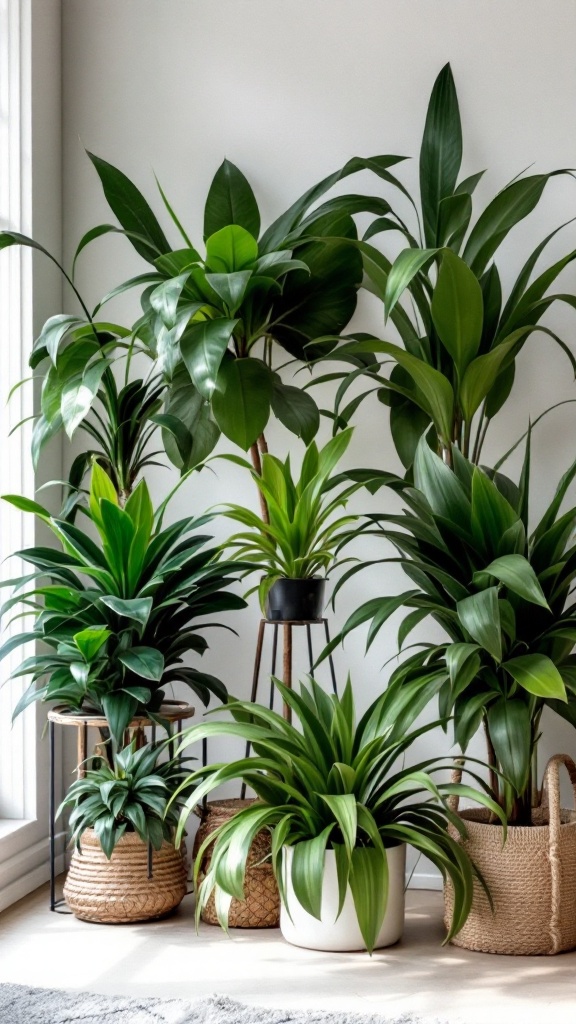
5. A Minimalist White Staircase Garden

In a white interior, a restrained plant arrangement can provide all the contrast needed. Choose sculptural species such as snake plants, ZZ plants, jade, or a single bird-of-paradise, then pair them with white or pale stone planters.
Limit the palette to green, white, and one natural material so the staircase remains visually calm. Repetition of matching containers creates order, while one larger specimen adds scale without making the area feel cluttered.
6. A Built-In Staircase Planter Bed

A built-in planter can make greenery feel like part of the architecture. A masonry, tiled, or timber-edged bed beside the stairs is especially effective for grouping plants at floor level while keeping individual pots out of sight.
Before construction, specify a waterproof membrane, drainage outlet, and access for maintenance. A planted bed works best when its edges are clearly separated from the stair nosings and handrail route.
7. A Narrow Staircase Shelf Garden

Even a narrow stair hall can support a small garden when plants are displayed on wall-mounted shelves. Place compact pots on staggered shelves beside the stairs, using peperomia, fittonia, small ferns, and trailing plants that stay within their assigned footprint.
Install shelves into suitable structural points and keep their depth modest. Rounded edges, drip saucers, and lightweight containers are practical choices in a busy circulation zone.
8. A Japanese-Inspired Staircase Garden

For a quieter atmosphere, borrow from Japanese garden principles: simplicity, asymmetry, natural texture, and careful empty space. A few ferns, a sculptural branch, moss-like groundcover, and a stone or ceramic container can create a composed scene beside the stairs.
Use warm timber, textured plaster, bamboo, or dark stone to support the theme. The goal is not to fill every corner but to create a moment of calm that can be appreciated while moving between floors.
9. A Vertical Moss Wall Beside the Stairs

A preserved or living moss wall turns a blank stairwell wall into a soft green backdrop. It is particularly useful where floor space is limited, because the planting rises vertically without narrowing the passage.
Preserved moss needs no irrigation but should be protected from strong direct sunlight and excessive humidity. For a living wall, use a professional modular system with irrigation, drainage, and access panels rather than improvising a sealed wall installation.
10. A Staircase Garden With Hanging Planters

Hanging planters add greenery at eye level without taking up valuable floor area. Suspend a small group of macramé, ceramic, or metal planters beside a stairwell, then fill them with spider plants, string plants, or compact ferns.
Vary the hanging heights while keeping every pot clear of heads, handrails, and stair movement. Ceiling fixings must be rated for the fully watered weight, and drip protection is essential above wood or carpet.
11. An Indoor Herb Garden Beside Kitchen Stairs

If the staircase connects to a kitchen or dining area, use the nearby landing for a practical herb garden. Basil, thyme, mint, parsley, chives, and rosemary can thrive in bright conditions and make the route between floors useful as well as attractive.
Choose washable pots and place herbs where they receive several hours of light. Because mint spreads aggressively and basil needs consistent moisture, grow each in its own container and harvest regularly to keep the display compact.
12. A Terracotta Pot Staircase Display

Terracotta pots bring warmth and repetition to a staircase garden. Group different sizes on a landing or along a broad side platform, using plants with contrasting forms such as upright sansevieria, rounded peperomia, and fine-leaved ferns.
Terracotta dries quickly, which suits many drought-tolerant plants but requires more frequent watering for thirsty species. Add saucers, check for mineral buildup, and keep the arrangement low enough that it does not obstruct the stairs.
13. A Moody Stairwell With Dramatic Foliage

Deep wall colors can make a staircase garden feel intimate and theatrical. Against charcoal, navy, forest green, or burgundy walls, use glossy monstera, patterned calathea, or dark-leaved philodendron to create layered tonal contrast.
Low-light conditions still require realistic plant choices and possibly a discreet grow light. Warm sconces or concealed uplighting can highlight foliage after dark without producing glare on the stairs.
14. A Succulent Garden on a Sunny Landing

A sunny landing is well suited to a compact succulent garden. Arrange echeveria, haworthia, aloe, and jade in shallow containers or small pots, leaving enough space between plants for air circulation and growth.
Use a gritty, fast-draining mix and water only when the soil has dried thoroughly. Keep the collection away from the stair edge and choose containers with a stable base to prevent accidental knocks.
15. A Living Handrail Planting Scheme

Plants can soften a long handrail wall without interfering with the rail itself. Place a continuous row of narrow planters below the rail, using repeated foliage plants to create a green line that follows the staircase.
Keep the handrail fully accessible and trim plants before they reach the grip or obscure stair lighting. A built-in ledge with concealed drip protection is safer and easier to maintain than loose pots balanced on the rail.
16. A Cactus Collection Under Open Risers

Open-riser stairs can frame a sculptural cactus display beneath them. Combine columnar cacti, barrel forms, and architectural euphorbias in gravel-topped pots to echo the strong lines of the stair structure.
This idea suits bright, dry interiors and requires careful positioning. Select thorn-free or less hazardous varieties when children or pets use the stairs, and place every pot far enough from the walking route to avoid contact.
17. A Staircase Garden With Reclaimed Wood

Reclaimed wood planters, crates, and wall ledges give a staircase garden a relaxed, characterful feel. Pair weathered timber with hardy plants such as spider plants, pothos, cast-iron plants, and compact palms.
Seal the wood on all sides and use removable nursery pots inside decorative containers. This protects the timber from watering while preserving the informal layered appearance of the display.
18. A Gallery Staircase With One Plant Per Level

In a gallery-style staircase, a single carefully chosen plant at each landing can create rhythm without visual overload. Repeat similar planters while changing the plant silhouette from level to level, such as a palm, fern, upright snake plant, and trailing philodendron.
This approach works particularly well in tall homes where the staircase is seen from multiple floors. Keep each plant on a stable landing surface and coordinate pot colors with the artwork or wall finish nearby.
19. A Compact Apartment Staircase Garden

Small homes can still support indoor staircase gardens by using vertical space and compact plants. A slim console, narrow wall shelf, or corner stand can hold a curated group of pothos, snake plants, orchids, or small palms without crowding the stairs.
Choose one consistent container finish to reduce visual noise. Measure the passage first, then maintain a clear route for carrying laundry, furniture, and everyday items between floors.
20. A Tropical Staircase Garden With Water Feature

For a resort-like atmosphere, combine tropical foliage with a small recirculating water feature near the base of the stairs. Broad-leaved plants, palms, pebbles, and gentle water movement can transform an otherwise hard architectural corner.
Waterproofing and electrical safety are essential. Use a sealed basin, low-voltage equipment where appropriate, and a splash-free location well away from stair treads, rugs, and electrical outlets.
21. A Low-Maintenance Staircase Garden

A low-maintenance scheme can look polished with the right plant selection. Use snake plants, ZZ plants, cast-iron plants, pothos, and preserved moss in a simple arrangement that tolerates occasional missed watering.
Group plants where they can be reached easily for dusting and inspection. Add moisture meters, self-watering inserts, or a timed grow light if the stairwell is dim, but avoid systems that allow water to collect near the steps.
A staircase garden does not need a large footprint to make a strong impression. The most successful designs match the plants to the available light, use containers that suit the architecture, and preserve a completely safe route through the home.
Start with one focal plant or a small landing display, then build gradually as you learn how the space performs. With thoughtful placement and reliable watering habits, even the hardest-working staircase can become one of the most inviting green spaces in the house.