19 Herb Garden Ideas for a Fresh and Beautiful Growing Space
A thoughtfully planned herb garden can bring fresh flavor, fragrance, texture, and color to almost any growing space.
Whether you have a sunny windowsill, a compact balcony, or a spacious backyard, these herb garden ideas will help you create a practical and beautiful place to grow basil, mint, rosemary, thyme, and more.
1. Grow a Convenient Kitchen Windowsill Herb Garden

Turn a bright kitchen windowsill into a practical growing space with a row of compact pots filled with basil, parsley, chives, thyme, or mint.
Choose containers with drainage holes and place them on a narrow tray to protect the sill from excess water. Matching ceramic pots create a polished look, while recycled jars or small metal tins give the display a relaxed, farmhouse feel.
Keep the herbs close to your food-preparation area so harvesting becomes part of your cooking routine. Group plants with similar watering needs, rotate the pots regularly for even growth, and trim often to encourage fresh, bushy leaves.
A sunny window, attractive containers, and clearly visible greenery can make this one of the easiest Herb Garden Ideas to enjoy every day.
2. Arrange Herbs in a Productive Tiered Garden

Make the most of a small patio, balcony, or side yard by arranging herbs in a tiered planter.
A ladder-style stand, stacked wooden boxes, or stepped shelves gives every plant access to light while creating a fuller vertical display. Place taller rosemary or sage near the top, medium-height basil and oregano in the middle, and trailing thyme or mint where it can spill over the edges.
Use separate planting compartments when possible, especially for vigorous herbs such as mint. Add plant labels to make harvesting easier, and leave enough space between levels for watering and pruning.
The result is an organized, productive garden that uses vertical space without feeling crowded.
3. Plant a Classic Raised-Bed Herb Garden

A raised bed gives a herb garden a timeless, structured appearance while making planting, watering, and harvesting easier. Build a simple rectangular frame from untreated wood, stone, brick, or weather-resistant metal, then fill it with loose, well-draining soil.
Divide the space into informal sections or use narrow paths and edging to separate rosemary, sage, thyme, oregano, parsley, and basil.
Position the bed in a sunny location and place taller herbs toward the back so shorter plants remain visible.
Mediterranean herbs prefer leaner, faster-draining soil, while leafy herbs appreciate more consistent moisture. Add a neat border, small plant markers, or gravel mulch to give the bed a classic kitchen-garden finish.
4. Create a Flexible Patio Container Herb Garden

For renters, balconies, and paved patios, containers offer one of the most flexible ways to grow fresh herbs. Combine large pots, narrow troughs, window boxes, and hanging baskets to create a layered display that can be rearranged as the seasons change.
Use a roomy pot for rosemary or sage, smaller containers for basil and parsley, and a separate pot for mint to keep its spreading roots contained.
Choose lightweight containers if you expect to move the garden, and place them near the kitchen or outdoor dining area for easy harvesting. Keep the arrangement visually cohesive by repeating one material or color, then vary pot heights and leaf textures for interest.
Good drainage, regular trimming, and a sunny, sheltered position will keep this patio garden productive.
5. Use a Vertical Wall for a Space-Saving Herb Garden

Turn an unused fence, patio wall, or sunny kitchen exterior into a productive growing space with a vertical herb garden. Mount slim wooden shelves, pocket planters, or individual pots in staggered rows so basil, parsley, thyme, chives, and oregano are easy to see and harvest.
A cedar frame adds warmth, while painted containers can coordinate with the surrounding garden.
Choose a wall that receives several hours of sunlight and leave enough space between planters for air circulation.
Add drainage trays or a simple drip-watering system to make maintenance easier. Place taller herbs toward the top or back, and let trailing thyme or oregano spill over the lower edges for a lush, layered effect.
6. Hang Herbs in a Decorative Basket Garden

A decorative hanging basket can turn a porch, balcony, or kitchen doorway into a fragrant herb display. Use a woven basket, metal bowl, or moss-lined container with drainage, then combine upright herbs such as parsley or sage with trailing thyme, oregano, or mint.
The mix of textures creates a full, cascading look while keeping fresh ingredients close at hand.
Hang the basket where it receives suitable light and can be watered easily. Because elevated containers dry out faster than garden beds, check the compost regularly during warm weather.
Harvest little and often by pinching the growing tips, which encourages bushier plants and keeps the basket looking neat and productive.
7. Design a Spiral Herb Garden for Small Yards

A spiral herb garden packs several growing conditions into one compact, sculptural bed. Build a gently rising spiral from fieldstone, bricks, or reclaimed pavers, then fill the center with free-draining soil.
Plant sun-loving rosemary, sage, oregano, and thyme near the higher, drier sections, while parsley, chives, and mint can occupy cooler areas closer to the base.
Keep the spiral narrow enough that every section is easy to reach without stepping into the bed.
A small basin or pebble-filled low point can add moisture near the bottom, while a gravel surface improves drainage and reinforces the design. The result is both a practical small-yard herb garden and an attractive focal point.
8. Build a Mediterranean Herb Garden with Gravel and Stone

Create a sun-baked Mediterranean look by combining pale gravel, weathered stone, and aromatic herbs in a sharply drained planting bed. Rosemary, thyme, sage, oregano, and lavender work beautifully together, offering silvery foliage, soft purple flowers, and plenty of fragrance.
Use large stones as informal edging or arrange them around individual plants to give the garden a natural, dry-climate character.
Choose the brightest, most open position available and avoid heavy soil that stays wet. Mix grit or horticultural gravel into the planting area, then cover the surface with a thin layer of decorative stone to suppress weeds and keep foliage clean.
Repeat similar plants in loose groups for a relaxed, cohesive design rather than a crowded collection.
9. Blend Herbs into a Cottage-Style Garden Border

Bring a relaxed, old-fashioned feel to your planting beds by weaving useful herbs among cottage-style flowers.
Purple sage, thyme, rosemary, lavender, and chives add silvery foliage, soft texture, and seasonal color while blending naturally with roses, catmint, calendula, foxgloves, and daisies.
Use taller herbs toward the back or middle of the border, then edge the front with low-growing thyme or compact oregano.
Allow some herbs to flower for a loose, informal look that feels more natural than a perfectly separated kitchen garden. Repeating the same herb in several spots will help the border look intentional while keeping fresh leaves within easy reach for cooking.
10. Combine Herbs and Vegetables in a Kitchen Garden

Make a kitchen garden more productive and visually interesting by planting herbs directly among vegetables.
Tuck basil around tomatoes, parsley beside peppers, dill near leafy crops, and chives along the edges of raised beds. This mixed approach creates a lush, abundant look while keeping frequently used ingredients close together.
Vary plant heights to make the most of the space: place tomatoes or trellised beans behind compact herbs, then use parsley, thyme, and oregano to fill gaps near the front.
Leave enough room for air circulation and harvesting, and group plants with similar light and watering needs so the whole bed stays easy to maintain.
11. Plant a Fragrant Herb Garden Along a Pathway

Turn an ordinary walkway into a sensory garden by planting fragrant herbs where visitors can brush against them as they pass.
Lavender, rosemary, thyme, mint, and lemon balm release their strongest scents when touched, making a pathway border feel welcoming and memorable.
Use compact thyme between stepping stones or along the path edge, then repeat lavender and rosemary in larger clumps for height and structure. Choose a sunny, well-drained location and keep vigorous spreaders such as mint contained in pots or bottomless containers.
A gravel or stone path complements the soft foliage and helps create a relaxed Mediterranean-inspired garden style.
12. Create a Pollinator-Friendly Herb Garden

Design an herb garden that feeds bees, butterflies, and other beneficial insects by allowing some plants to flower.
Chives, oregano, thyme, sage, basil, marjoram, dill, fennel, and lavender all bring useful blooms as well as edible leaves. Group plants in generous clusters so pollinators can move easily between flowers.
For a longer season of interest, combine early chive blooms with summer lavender, flowering oregano, and later basil or dill.
Grow extra plants so you can harvest from some while leaving others untouched for insects. Avoid pesticides, provide shallow water and bare, well-drained soil, and leave a few spent stems in place to create shelter for native bees.
13. Grow a Compact Herb Garden on a Balcony Railing

Make the most of a small outdoor space by fitting a narrow planter box over the balcony railing.
This setup keeps herbs at a comfortable harvesting height while leaving valuable floor space open for a chair, table, or additional pots. Choose lightweight containers with secure brackets, drainage holes, and a water-catching design to prevent runoff.
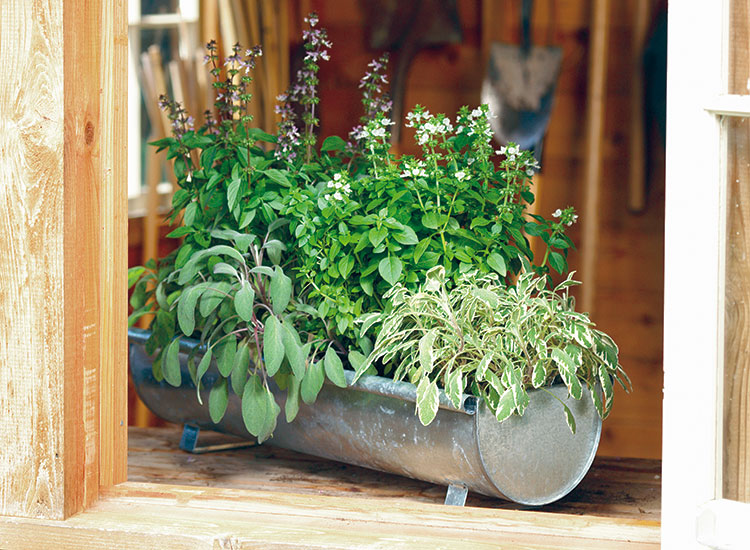
Fill the box with compact, frequently used herbs such as thyme, chives, parsley, oregano, or basil. Group plants with similar sun and watering needs, and position the railing planter where it receives several hours of light.
Regular trimming will encourage fuller growth and keep the arrangement neat. Railing planters and window boxes are especially practical for balcony herb gardens because they add growing space without crowding the floor.
14. Repurpose Everyday Containers for an Upcycled Herb Garden

Turn everyday packaging into a charming herb garden by reusing food tins, coffee cans, jars, or sturdy plastic containers.
Wash each container thoroughly, remove sharp edges, and add drainage holes before planting. For containers that may rust or deteriorate, place a nursery pot inside as a removable liner.
Paint or label the containers to create a coordinated display, then arrange them on a sunny windowsill, shelf, or outdoor table. Small cans work well for thyme, chives, and oregano, while larger tubs can hold basil, mint, or parsley. This approach keeps useful materials out of the waste stream and gives your garden a personal, collected look.
Upcycled cans and jars have been used successfully as decorative herb planters in both indoor and outdoor projects.
15. Organize Herbs in a Dedicated Tea Garden

Design a garden around the herbs you enjoy steeping instead of planting only for cooking.
A dedicated tea garden can include calming chamomile, fragrant lavender, lemon balm, peppermint, spearmint, bee balm, and lemon verbena. Place taller plants toward the back and low-growing herbs near the edge so every variety is easy to identify and harvest.
Use separate containers for vigorous spreaders such as mint and lemon balm, or give them their own defined area in the bed. Add a small path, plant labels, a basket for gathering, or a nearby bench to make the space feel intentional.
Keeping tea herbs together makes it easy to harvest fresh leaves and flowers for a seasonal tisane.
16. Add an Indoor Hydroponic Herb Garden

An indoor hydroponic herb garden is a tidy option when outdoor space or strong window light is limited.
Compact countertop systems use a water reservoir, growing pods, nutrients, and an integrated LED light to keep herbs growing in a small footprint. Because there is no loose soil, the setup works well in kitchens, apartments, and home offices.
Start with fast-growing herbs such as basil, parsley, chives, cilantro, or mint, and place the unit somewhere convenient for harvesting.
Check the water level regularly, follow the nutrient instructions, and keep the light high enough to give plants room to develop. A hydroponic system can also become an attractive modern feature when paired with simple cabinetry, open shelving, or a bright kitchen counter.
17. Create a Colorful Herb Garden with Decorative Planters

Give your Herb Garden Ideas a cheerful lift by pairing useful plants with decorative planters in a mix of colors, shapes, and finishes.
Try basil in a glossy blue pot, thyme in a sunny yellow container, and rosemary in a tall terracotta planter. Grouping different heights creates a layered display while keeping each herb easy to reach.
Choose containers with drainage holes and match the pot size to each plant’s mature growth. Painted ceramic pots, patterned metal planters, vintage tins, and colorful window boxes can all add personality to a patio, balcony, or kitchen entrance.
Keep plants with similar sunlight and watering needs together, and use simple labels so the display remains both attractive and practical.
18. Design a Low-Maintenance Herb Garden with Hardy Perennials

For an easier garden routine, build around hardy perennial herbs that return year after year. Rosemary, sage, thyme, oregano, chives, lavender, and mint can provide dependable foliage, fragrance, and harvests with less seasonal replanting.
Place drought-tolerant Mediterranean herbs in full sun and sharply drained soil, while moisture-loving mint is best kept in its own container.
Keep the layout simple with wide paths, uncluttered plant groupings, and enough space for mature growth. A light spring trim, occasional watering during prolonged dry spells, and regular harvesting will help plants stay compact and productive.
Choose varieties suited to your local climate, then use gravel, stone, or raised beds to improve drainage and reduce maintenance.
19. Build a Beautiful, Harvest-Friendly Herb Garden Near the Kitchen

The most useful herb garden is usually the one you can reach in seconds. Position a narrow raised bed, border, trough, or collection of pots just outside the kitchen door or beside a frequently used path.
Grow everyday favorites such as basil, parsley, chives, rosemary, thyme, oregano, and sage where they are visible and easy to snip while cooking.
Make harvesting comfortable by leaving clear access around the bed and placing taller herbs at the back, with compact thyme and chives near the edge. Use well-drained soil, sturdy edging, and weather-resistant labels to keep the space tidy.
A nearby basket, pair of scissors, or small potting shelf can turn quick harvesting into a simple daily habit.
From a simple windowsill arrangement to a layered backyard design, the best herb garden is one that suits your space, sunlight, and cooking habits.
Choose an idea that fits your home, group herbs with similar needs, and enjoy a fresh, fragrant growing space that is both useful and inviting.