22 Narrow Garden Design Ideas to Make the Most of a Small Outdoor Space
A narrow garden can be challenging to plan, but its limited width also creates an opportunity for thoughtful, distinctive design.
With the right layout, planting choices, boundaries, and focal points, even a long, compact outdoor space can feel inviting and spacious.
These narrow garden design ideas will help you improve flow, add privacy, create useful zones, and make every part of your garden work harder.
Use a Strong Central Sightline to Make the Garden Feel Longer

A strong central sightline gives a narrow garden a clear sense of direction. Start by aligning a straight path, strip of lawn, water rill, or repeated paving pattern with a feature at the far end.
A bench, arched gate, specimen tree, sculpture, or small fountain can become the destination that naturally draws the eye through the space.
Keep the central route visually open and use balanced planting or low hedges along both sides to frame the view. Repeating the same plants, pots, or lights reinforces the axis without making the garden feel rigid.
Even a modest focal point can create the impression of extra depth while giving the garden a polished, intentional structure.
Break Up the Space with Distinct Garden Zones

Instead of treating a narrow garden as one long strip, divide it into a sequence of useful outdoor rooms. One section might hold a dining table, another a lounge chair or bench, and a third could become a planting, play, or quiet reading area.
Giving each zone a clear purpose makes the garden feel more layered and encourages people to move through it.
Use changes in paving, low raised beds, trellis screens, steps, or groups of taller plants to mark the transitions.
Avoid solid barriers that make the space feel boxed in; semi-transparent dividers preserve light and glimpses between areas. Repeating a material or plant in every zone will keep the whole design cohesive.
Choose a Diagonal Layout to Create More Visual Width

Diagonal lines make a narrow garden feel less like a corridor because they shift the eye from side to side.
Angle a patio, path, deck, or planting bed rather than running every edge parallel with the house and boundary fences. Even a modest diagonal can reveal more of the garden at once and create a stronger sense of movement.
For a simple approach, lay rectangular pavers across the width at an angle, or position a small seating area so its back edge cuts diagonally into the garden. Keep the remaining spaces calm with restrained planting and one consistent paving material.
The result feels more dynamic, while the angled geometry gives the garden greater visual breadth.
Install a Compact Dining Area at the Garden’s Widest Point

Place the dining area where the garden opens out most generously, even if that point is near the back rather than directly beside the house.
A wider section can accommodate a compact round table, built-in bench, or slim rectangular table without narrowing the main circulation route. This creates a comfortable destination instead of forcing furniture into the tightest part of the garden.
Choose furniture with a small footprint and let the layout follow the available width. Foldable chairs, a wall-mounted table, or an L-shaped bench can provide flexible seating while preserving room to walk.
Frame the dining spot with containers, a pergola, or a narrow planting bed so it feels like a defined outdoor room without blocking light or views.
Build a Slim Bench into a Boundary or Raised Bed

A slim built-in bench can turn an unused garden edge into a practical seating area without narrowing the main walkway. Position the seat against a boundary wall, fence, or raised bed so it doubles as a strong visual anchor and keeps furniture from floating in the center of the garden.
A depth of around 40 to 50 centimeters is usually enough for comfortable sitting while preserving valuable floor space.
Choose materials that connect with the rest of the design, such as timber slats, rendered masonry, brick, or stone coping. Add a slim back cushion, soft outdoor upholstery, or integrated storage beneath the seat.
Surrounding the bench with raised planting makes the seating feel tucked into the garden and creates a welcoming destination at the far end of a narrow plot.
Use Vertical Planting to Save Valuable Floor Space

When a garden is short on width, move planting upward instead of allowing pots and borders to consume the floor.
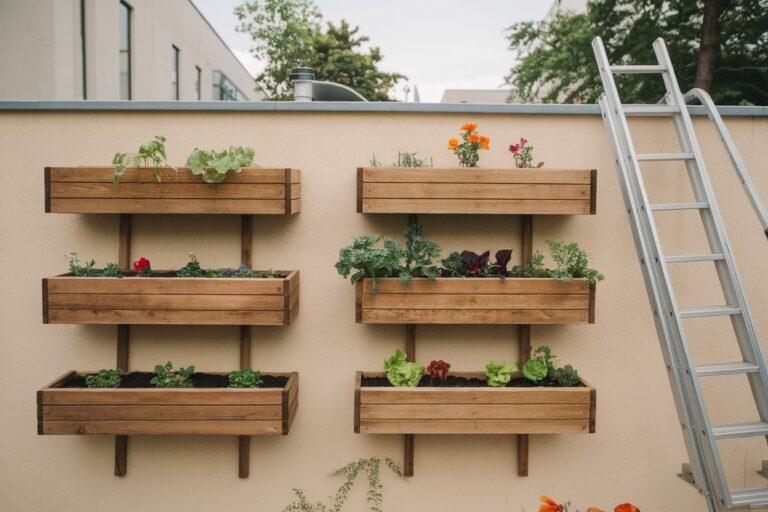
Wall-mounted planters, tiered shelves, hanging containers, pocket systems, and narrow planter towers can create several planting levels within the footprint of one border. This approach is especially useful for herbs, salad leaves, strawberries, compact flowers, and trailing plants that benefit from easy access.
Keep the arrangement visually calm by repeating a small number of container styles or using one coordinated frame. Place sun-loving plants near the top and shade-tolerant varieties lower down, then leave enough space between containers for watering and airflow.
A vertical planting feature can also soften a blank wall while keeping the central path clear and easy to use.
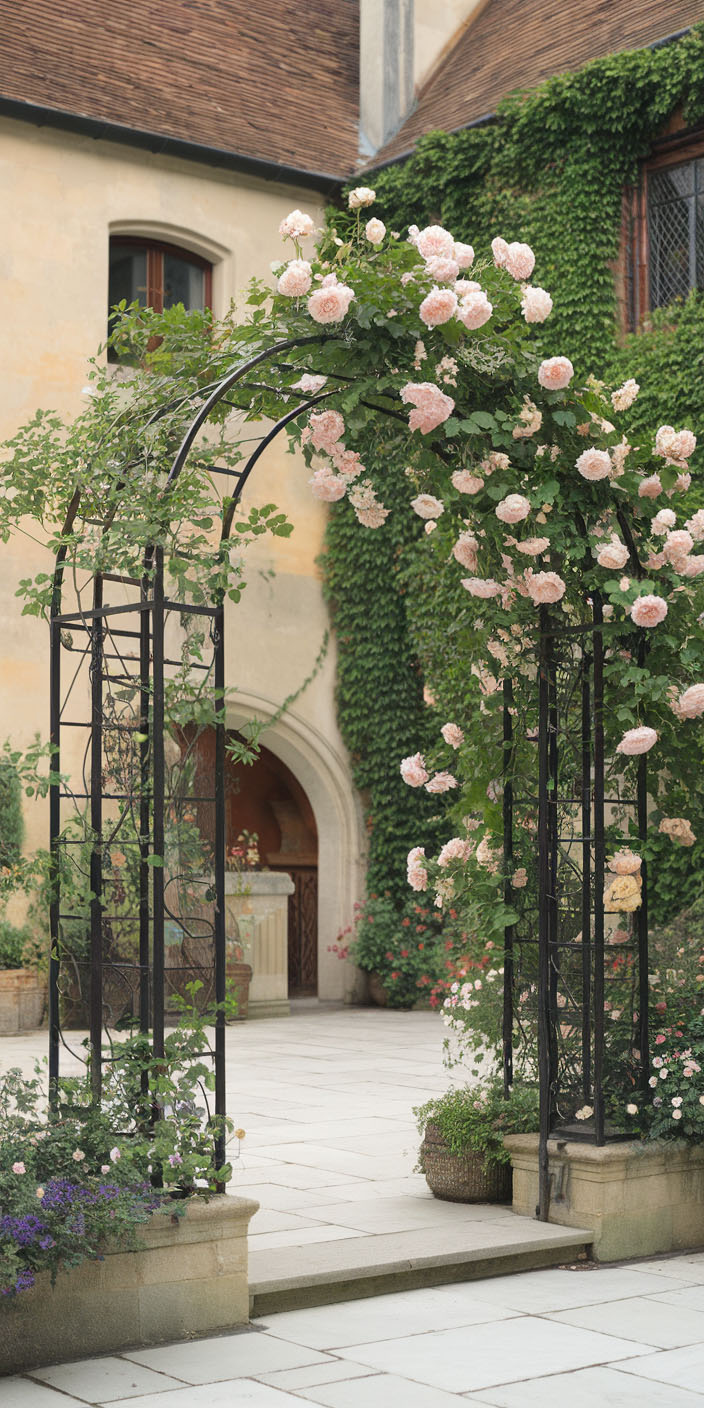
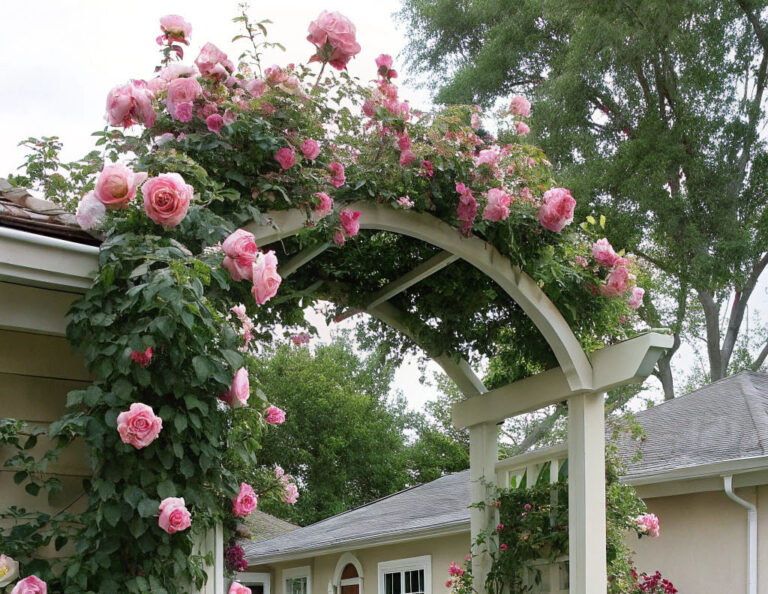
Grow Climbers on Trellises for Height and Privacy

A trellis is one of the simplest ways to add height, greenery, and privacy without taking up the room required by a hedge or spreading shrub. Fix a narrow panel to a fence or wall, or use a freestanding trellis inside a long planter so the structure can be moved or refreshed later.
The open framework allows light through while guiding plants upward and visually breaking up tall boundaries.
Choose climbers according to the available light and the level of maintenance you can manage. Flowering roses, clematis, jasmine, honeysuckle, and compact vines can all create seasonal interest, while evergreen varieties provide more consistent screening.
Train young stems horizontally before directing them upward to encourage fuller coverage, and leave a small gap behind the trellis for airflow and future pruning.
Create a Living Green Wall Along a Blank Boundary

A living green wall can transform an exposed fence or plain masonry boundary into the main feature of a narrow garden. Use modular planting panels, wall-mounted pockets, or a series of troughs fixed at different heights to create a layered display of foliage, flowers, herbs, or trailing plants.
The result draws the eye upward and helps a long, enclosed space feel greener and more immersive.
Before installing the system, check how much sunlight reaches the boundary and make sure the wall can support the structure and irrigation equipment. Group plants with similar watering needs, include evergreen foliage for year-round impact, and leave access for trimming and maintenance.
A dark painted fence behind the planting can make the greenery appear richer while visually disguising an unattractive boundary.
Layer Planting from Low Ground Cover to Tall Specimens

Layered planting gives a narrow garden a fuller, more generous feel without allowing every plant to compete for width.
Start with a low carpet of ground cover along the path, then add compact perennials and rounded shrubs through the middle. Finish with one or two taller specimens, such as an airy tree, slim evergreen, or upright ornamental grass, positioned toward the back or at intervals along the border.
Keep the planting depth controlled by choosing naturally narrow varieties and leaving enough clearance for maintenance.
Repeating a few plants within each layer will make the arrangement feel intentional rather than crowded. The result is a border with changing heights, textures, and viewpoints that works particularly well beside a fence, wall, or long walkway.
Use Repeated Plant Shapes to Create a Cohesive Look

Repetition is one of the easiest ways to make a narrow garden feel designed rather than randomly planted. Choose one or two recognizable forms—rounded shrubs, upright grasses, clipped spheres, or fan-shaped foliage—and repeat them along the length of the space.
The repeated silhouettes guide the eye forward, helping a slim garden feel longer and more connected.
Plants do not need to be identical to create harmony. Similar shapes in slightly different colors or textures can provide variety while maintaining a unified look. For example, repeat mounded plants along the path and add occasional vertical accents behind them.
Keep the palette restrained, especially in very small gardens, so the rhythm remains clear instead of becoming visually busy.
Add a Narrow Raised Bed for Structured Planting

A narrow raised bed can turn an unused edge into a strong planting feature while clearly separating plants from paths and paving. Build it along a fence, wall, or boundary using timber, brick, stone, or rendered blocks, keeping the width compact enough to reach the back comfortably.
A long, consistent outline often makes the whole garden look neater and more spacious.
Use the bed for a controlled mix of herbs, vegetables, flowers, or ornamental grasses. Keep taller plants toward the boundary and lower varieties near the front edge so the bed remains easy to see and maintain.
Repeating the same construction material elsewhere—such as on edging or a seat—will help the raised bed feel integrated into the overall narrow garden design.
Choose Multi-Functional Furniture for a Small Footprint

In a narrow garden, every item should earn its place. Choose furniture that performs more than one job, such as a bench with built-in planters, a storage seat, a folding table, or a console that doubles as a potting surface.
Combining functions reduces clutter and preserves a clear route through the garden, which is essential when space is limited.
Look for slim profiles, open legs, and furniture that can sit against a wall or boundary without blocking circulation.
A bench-planter combination can define a seating area while adding greenery, whereas a folding table can disappear when the space is needed for entertaining. Repeat materials such as timber, metal, or concrete so practical pieces feel like part of the garden design.
Use Folding or Wall-Mounted Furniture in Tight Spaces

In a narrow garden, bulky furniture can quickly turn a useful passage into an obstacle course. Choose a folding bistro set, collapsible chairs, or a slim wall-mounted table that can be opened only when needed.
When folded flat, the furniture keeps the floor clear and preserves the garden’s sense of width.
Mount a small table to a sturdy wall, fence, or shed, and pair it with folding chairs that can hang from hooks nearby. Select weather-resistant finishes and rounded edges for safer movement.
This approach works especially well beside a back door, along a paved side return, or in a compact courtyard where every inch of circulation matters.
Lay Long, Narrow Paving to Emphasize Garden Depth

Use the direction of your paving to guide the eye through a slender plot.
Long rectangular slabs or narrow pavers laid end to end create strong lines that lead toward the far boundary, making the garden feel deliberately deep rather than awkwardly thin. Keep the joints consistent so the pattern feels calm and continuous.
For a softer look, combine elongated paving with gravel joints, low ground cover, or planting that spills slightly over the edges. Avoid filling the whole garden with busy patterns, which can make the space feel fragmented.
A simple stretcher bond or repeated linear layout is particularly effective from a rear door or window where the full length of the garden is visible.
Add Curved Paths to Soften a Rectangular Garden

A straight path can make a narrow garden feel like a corridor, so introduce a gentle curve to slow the eye and create a more relaxed journey.
Even a modest bend can conceal part of the garden, encouraging visitors to move through the space rather than seeing everything at once from the house.
Repeat the curved shape in planting beds, lawn edges, or low retaining walls to make the layout feel intentional. Keep the path wide enough for comfortable access, and use one consistent material so the route remains visually clear.
A curve can also create small pockets for a bench, a tree, or a container display without requiring extra width.
Use Light-Coloured Materials to Brighten Shaded Areas

Pale materials can make a shaded narrow garden feel more open and welcoming. Cream paving, light gravel, white-rendered walls, and soft beige fencing reflect available daylight instead of absorbing it.
These finishes are especially useful in north-facing courtyards or gardens enclosed by tall walls.
Balance the brightness with green foliage, dark timber, or charcoal containers so the design does not feel washed out. Light-colored surfaces also provide a clean backdrop for ferns, hostas, grasses, and white flowers.
For the strongest effect, use the same pale tone across the paving and one vertical surface, helping the limited light bounce around the garden while visually widening the space.
Create a Compact Water Feature as a Focal Point

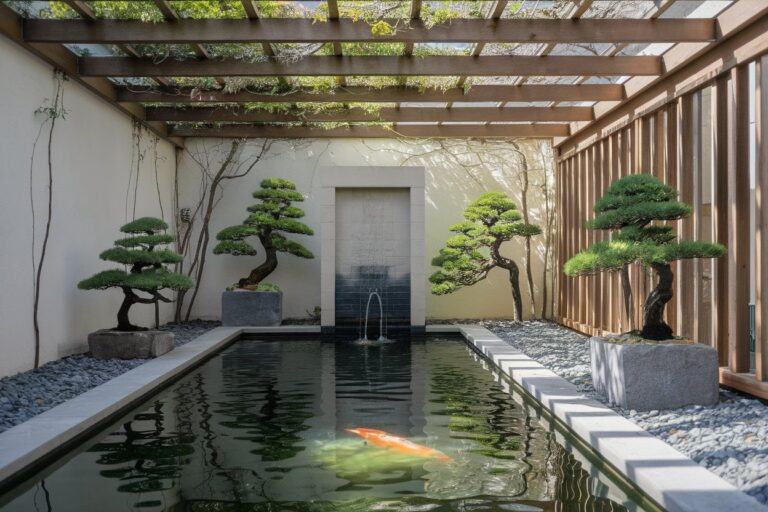
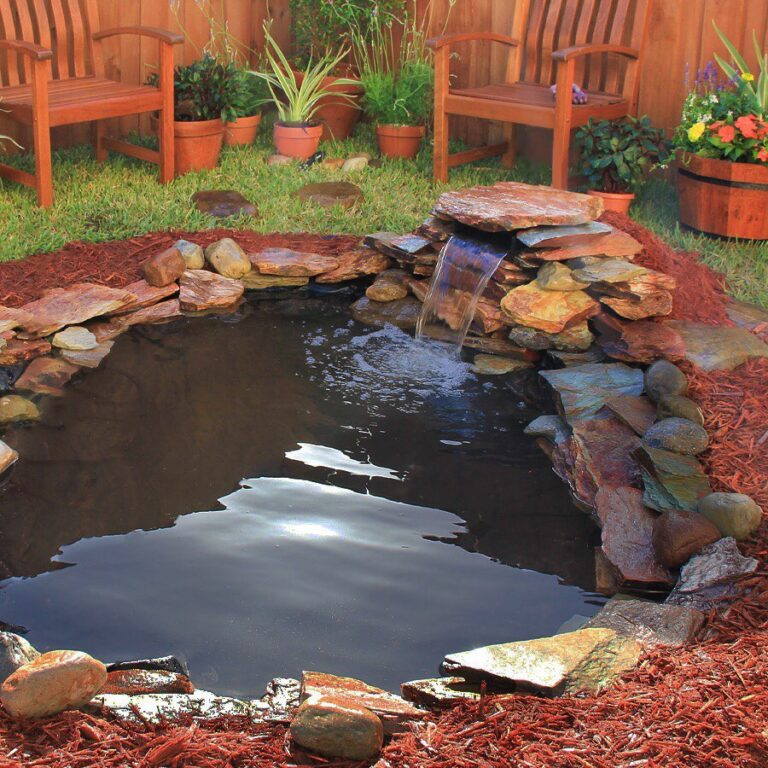
A compact water feature can give a narrow garden an instant sense of purpose. Choose a slim wall fountain, raised water bowl, or small container pond that fits neatly along one side or at the far end of the space.
Positioning it where it can be seen from the house makes the feature work harder, turning a distant boundary into a destination.
Keep the surrounding planting simple so the water remains the main attraction. Soft grasses, ferns, moss, or a few architectural pots can frame the feature without making the garden feel crowded.
A dark basin or reflective metal finish adds contrast, while the sound of gently moving water helps disguise nearby noise and creates a calmer atmosphere.
Use Mirrors Carefully to Reflect Light and Greenery

A well-placed mirror can make a narrow garden feel brighter and more layered, but it should look like part of the design rather than an indoor object.
Choose an outdoor-rated or acrylic mirror and mount it securely on a wall or fence. A slim arched, window-style, or black-framed design works especially well in a small courtyard.
Angle the mirror towards attractive planting, sky, or a light-colored surface rather than bins, doors, or neighboring walls. Conceal the edges with trellis, climbers, or leafy pots so the reflection feels believable.
Avoid covering every boundary with mirrors; one carefully positioned panel usually creates more depth without making the garden feel visually confusing.
Add Built-In Storage Beneath Seating or Along Walls

Built-in storage helps a narrow garden stay useful without adding bulky furniture. A bench with a lift-up seat can hide cushions, children’s toys, gardening tools, or outdoor dining accessories, while a shallow run of cupboards along a wall can keep everyday items close at hand.
Matching the storage finish to the fence, paving, or house creates a more streamlined look.
Plan ventilation, drainage, and weather-resistant materials so stored items remain protected. If a full cabinet would make the passage feel tight, use open shelves beneath a bench for pots, baskets, or neatly stacked logs.
Keep the depth modest and maintain a clear walking route, allowing the storage to support the garden without becoming its dominant feature.
Make the End Boundary a Feature Wall

In a narrow garden, the end boundary naturally attracts attention, so make it a deliberate feature rather than leaving it as a plain fence or blank wall.
Paint it in a rich, receding shade, clad it with timber slats, or use patterned tiles to create a strong visual destination. The right finish can make the garden feel designed from end to end.
Layer the wall with a simple focal element such as a built-in planter, circular mirror, sculptural artwork, espaliered tree, or narrow water spout.
Keep the foreground uncluttered so the boundary remains visible from the house. Repeating one or two colors from the feature wall in cushions, pots, or planting will connect the distant end with the rest of the garden.
Use Lighting to Extend the Garden into the Evening

Good lighting can make a narrow garden feel larger and more inviting after sunset. Use a combination of low-level path lights, wall-mounted lanterns, and discreet uplighting to create depth without flooding the whole space.
Position lights along steps, changes in level, or the main walkway so the garden remains safe and easy to use.
Warm white bulbs usually create a softer, more relaxing atmosphere than cool lighting. Try string lights above a compact seating area, lanterns on a bench, or concealed spotlights aimed at textured foliage.
Keep fixtures subtle and direct light downwards where possible, preserving the garden’s calm mood while drawing attention to its best features.
Keep the Colour Palette Simple for a More Spacious Feel

A restrained colour palette helps a narrow garden feel calmer, clearer, and more spacious. Choose two or three main tones and repeat them throughout the planting, containers, furniture, and hard landscaping.
Green foliage can form the foundation, while white, soft blue, pale pink, or silver provides gentle contrast without making the space look visually crowded.
Repeating the same flower colours or materials along the length of the garden also creates rhythm and makes separate areas feel connected. For extra impact, vary leaf shapes and plant textures rather than adding lots of competing colours.
A simple scheme lets the eye move easily through the garden, making its full length feel intentional instead of cramped.
The best narrow garden design balances practicality with visual simplicity. By directing the eye, using vertical space, choosing appropriately scaled features, and dividing the garden into purposeful areas, you can create an outdoor space that feels far larger than its dimensions suggest.
Start with the layout and circulation, then add planting, furniture, lighting, and personal details to create a garden that is both useful and inviting.