16 Backyard Forest Landscape Ideas
A backyard forest landscape can turn an ordinary outdoor area into a layered, peaceful retreat filled with shade, texture, wildlife, and seasonal interest.
Whether you have a large wooded property or a small urban yard, thoughtful planting and natural materials can create the feeling of a woodland garden.
Explore these backyard forest landscape ideas to design a space that feels beautiful, relaxed, and connected to nature.
Create a Layered Woodland Planting Design

Build your backyard forest landscape ideas around distinct planting layers that imitate a natural woodland.
Start with tall canopy trees, then add smaller understory trees and shrubs, followed by perennials, ferns, bulbs, and groundcovers near the soil surface. This vertical structure gives the garden depth and helps every plant occupy its own visual space.
For a relaxed look, repeat plants in loose drifts rather than arranging everything in straight rows.
Let ferns overlap paths, allow shrubs to soften the edges, and use leaf mold or shredded leaves to visually connect the planting. Choose species suited to your region, soil moisture, and available shade so the design feels natural and remains manageable as it matures.
Plant a Canopy of Native Shade Trees

A native shade-tree canopy gives a backyard forest landscape its structure, cooler microclimate, and long-term character.
Depending on your region, consider trees such as oak, hickory, tulip tree, river birch, or another locally native species with enough room to develop a broad crown. Plant several trees with varied spacing instead of creating a rigid row.
Before planting, check mature height, root spread, overhead utilities, and the distance from buildings. Use the filtered light beneath the branches for woodland shrubs and perennials rather than expecting dense turf to thrive.
A canopy also creates seasonal change: spring growth, summer shade, autumn color, and a textured winter branch pattern.
Add an Understory of Flowering Trees

Understory trees add the color and scale that make a backyard forest feel layered rather than dominated by tall trunks.
Native flowering choices such as eastern redbud, flowering dogwood, serviceberry, or Carolina silverbell can fit beneath a larger canopy while providing spring flowers, distinctive branching, berries, or autumn color.
Place these smaller trees where their blooms can be seen from windows, paths, or seating areas. Grouping a redbud with a dogwood can create a memorable succession of pink and white spring color, while surrounding them with ferns and woodland perennials keeps the lower planting attractive after flowering ends.
Give every tree enough room for its mature crown and avoid crowding the trunk with mulch.
Build a Native Fern and Groundcover Garden

Use native ferns and groundcovers to create the soft, textural floor of a backyard forest. Christmas fern, maidenhair fern, lady fern, wild ginger, woodland phlox, foamflower, and native sedges can fill spaces beneath trees while tolerating filtered light.
Combine upright fronds with broad leaves and low, spreading plants so the ground layer does not look flat.
Plant ferns in repeating groups along paths, around rocks, or beneath flowering trees, then weave groundcovers between them to reduce exposed soil. A layer of shredded leaves or leaf mold helps retain moisture and reinforces the woodland character.
Match each plant to local soil and moisture conditions, especially if the area alternates between dry shade and seasonal dampness.
Design a Winding Woodland Path

Replace a straight walkway with a gently curving path that disappears and reappears among trees, ferns, and low woodland plants.
The changing view makes even a compact backyard feel deeper and encourages a slower, more exploratory pace. Use natural materials such as wood chips, decomposed granite, bark, or irregular stepping stones to keep the route relaxed rather than formal.
Let the path follow existing trees, slopes, and interesting garden features instead of forcing a rigid line. Soften the edges with moss, leaf litter, native ground covers, and fallen branches.
Use Moss to Create a Soft Forest Floor

Turn a shady, damp corner into a velvety forest floor by encouraging moss around tree trunks, boulders, stepping stones, and the edges of a woodland path.
Its fine texture creates a quiet, unified carpet that looks more natural than clipped grass and helps the backyard feel connected to the surrounding forest.
Moss works best where soil stays consistently moist and foot traffic is light. Clear away heavy leaves periodically, avoid compacting the planting area, and use stones or logs to define walking routes.
Pair the moss with ferns, hostas, fallen branches, and small native ground covers for varied texture without losing the calm green effect.
Frame the Yard with Evergreen Screening

Create a year-round woodland backdrop by planting evergreen trees and shrubs along the rear or side edges of the backyard.
Layer tall arborvitae, junipers, yews, or native conifers behind lower evergreen shrubs so the boundary feels deep and natural instead of looking like a single clipped hedge. Varying heights and textures will make the screen more convincing.
Leave enough space for mature growth and mix species where conditions allow. Underplant the screen with ferns, woodland grasses, and shade-tolerant perennials to blend the planting into the rest of the landscape.
The result is a living frame that adds privacy, softens fences, filters views, and keeps the garden visually green through winter.
Add a Natural Woodland Pond

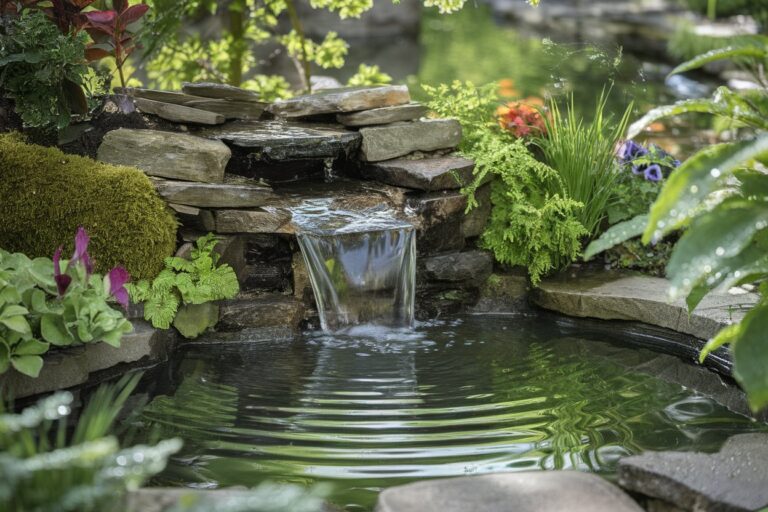
Introduce a small pond with an irregular outline, gently sloping edges, and natural-looking materials so it feels like part of the forest rather than a formal swimming pool.
Tuck it beneath existing trees or beside a winding path, then surround the water with stones, moss, ferns, sedges, and moisture-loving native plants. A shallow shelf along one side can create a softer transition from land to water.
Keep the design simple and allow planting to soften the liner and hide hard edges. Add a flat rock for wildlife access, a small log, or a bench positioned to overlook the surface.
Install a Small Backyard Stream

A small backyard stream can make a wooded landscape feel more natural, layered, and alive. Design the watercourse with a gentle curve rather than a straight line, using different sizes of rounded stone to create shallow pools, miniature rapids, and small cascades.
A pondless stream is a practical option for compact yards because the water recirculates through a hidden underground reservoir.
Surround the stream with moisture-loving plants such as ferns, sedges, moss, and native ground covers. Leave a few open views so the moving water remains visible from a seating area or pathway.
Natural boulders should look partially buried, helping the stream appear established rather than newly installed.
Create a Rustic Seating Nook Beneath the Trees

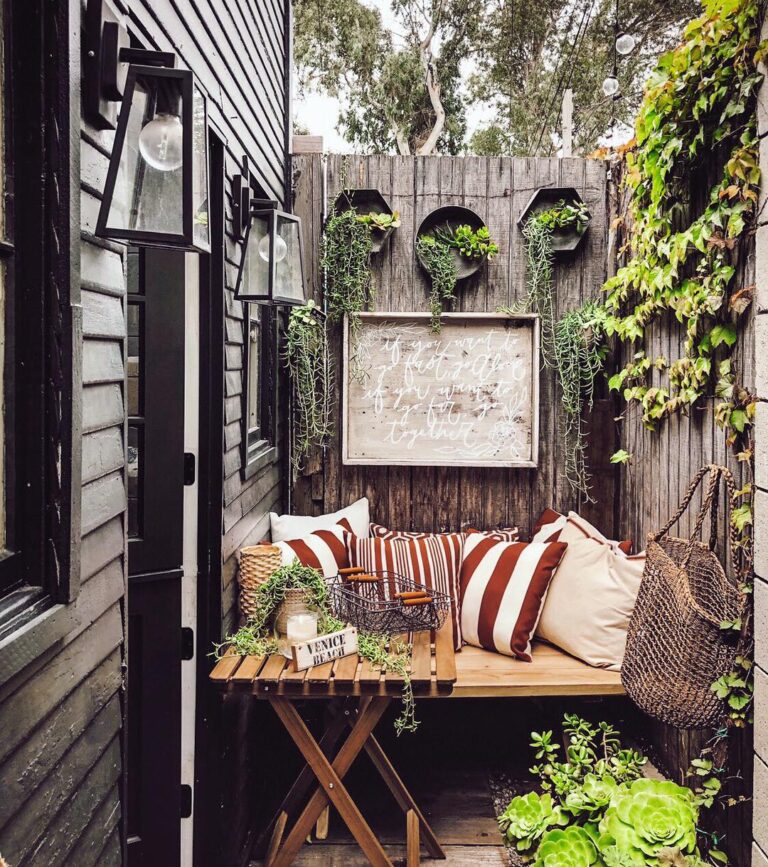
Turn the quiet space beneath a mature tree canopy into a rustic seating nook that feels tucked away from the rest of the yard.
Start with a simple wooden bench, Adirondack chair, or pair of weathered garden chairs positioned on a level surface of wood chips, pine needles, or compacted gravel. Keep the furniture relaxed and low-profile so it complements the surrounding trees.
Add comfort with a washable cushion, a small stump table, or a lantern for evening use.
Shade-tolerant plants such as ferns, hostas, woodland grasses, and ground covers can soften the edges without competing with the seating. Preserve major roots by avoiding deep excavation and placing the nook lightly on the existing ground.
Build a Fire Pit Area with Natural Stone

A natural-stone fire pit can become the warm, welcoming centerpiece of a backyard forest landscape.
Choose irregular fieldstone, stacked stone, or locally sourced rock so the structure feels connected to the surrounding trees. Set the pit within a broad circle of gravel, decomposed granite, or stone pavers, leaving enough clear space for chairs and safe movement around the fire.
Use built-in stone seating, rustic logs, or simple metal chairs to keep the area casual. Place the fire pit well away from low branches, structures, fences, and dry leaf buildup, and check local fire regulations before construction.
Low plantings around the perimeter can soften the hardscape while keeping the immediate fire zone open and easy to maintain.
Use Fallen Logs and Branches as Garden Features

Fallen logs and branches can give a backyard forest landscape an authentic, nature-inspired character while reducing garden waste.
Use a substantial log as informal edging along a path, a low border around a planting bed, or a rustic seat near a woodland garden. Larger sections of trunk can also become sculptural focal points, natural tables, or bases for shade-loving plants.
Arrange smaller branches into a loose log stack, dead hedge, or wildlife shelter in a quiet corner. Ferns, moss, mushrooms, and ground covers will gradually soften the display as the wood weathers.
Before leaving any timber in place, remove unstable limbs and avoid wood that could introduce pests or disease to healthy trees.
Add Stepping Stones Through a Shaded Garden

Guide visitors through a woodland-style backyard with a gently curving trail of stepping stones.
Choose irregular flagstone, weathered concrete, or locally sourced stone so the path feels connected to the surrounding trees rather than overly formal. Set each piece firmly and leave comfortable spacing for a natural walking rhythm.
Surround the stones with shade-tolerant plants such as ferns, hostas, coral bells, foamflower, moss, and woodland sedges.
A layer of leaf mold or fine bark mulch can soften the edges while helping retain moisture. Let the route lead toward a bench, small fountain, or hidden seating nook to make the journey through the garden feel intentional.
Create a Pollinator-Friendly Forest Edge

Use the sunny boundary between lawn and trees as a layered forest-edge habitat. Plant flowering shrubs and small understory trees at the back, followed by native perennials, grasses, and ground covers that bloom at different times.
This varied structure gives bees and butterflies both nectar sources and sheltered places to rest.
Choose plants adapted to your region, such as native goldenrod, wild bergamot, milkweed, asters, serviceberry, spicebush, or columbine. Group flowers in generous drifts instead of scattering single specimens, and leave a small patch of bare soil or fallen branches for ground-nesting insects.
Avoid pesticides and allow some seed heads and leaf litter to remain through winter.
Illuminate Trees and Paths with Subtle Lighting

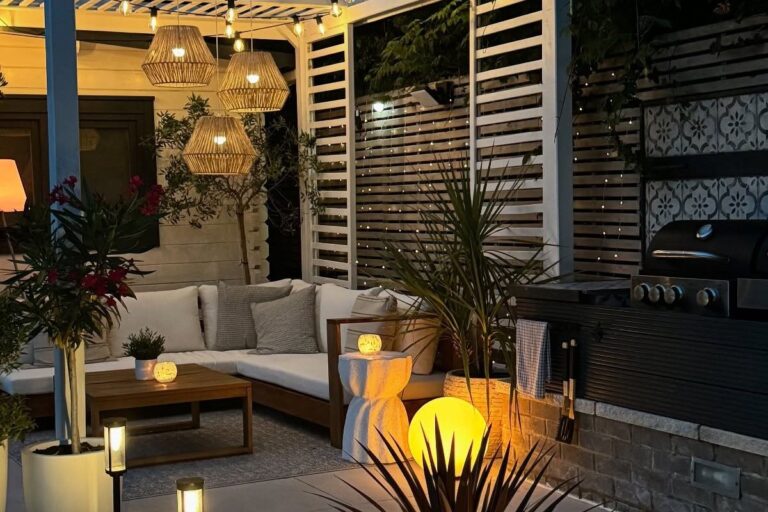
Extend the enjoyment of a backyard forest after sunset with restrained, warm lighting. Place a few low path lights along the walking route and use carefully aimed uplights to reveal the trunks or branching structure of one or two feature trees.
The goal is to create depth and safe movement without making the yard look brightly illuminated.
Hide fixtures among planting where possible, stagger them rather than lining both sides of the path, and choose warm color temperatures that complement bark and foliage.
Tree-mounted downlights can create a soft moonlit effect, while low-output lights near steps or changes in grade improve visibility. Keep darker areas between lit features so the forest still feels calm and natural.
Design a Low-Maintenance Backyard Forest Retreat

Turn a tree-filled corner of the yard into a restful retreat by working with the existing landscape instead of fighting it.
Preserve mature trees, use a simple surface such as wood chips or gravel, and add a durable bench, lounge chair, or compact seating platform. A destination at the end of a short path makes even a small backyard feel more immersive.
Choose resilient ground covers, ferns, sedges, and regionally native shrubs that tolerate the available light and moisture.
Reduce maintenance by grouping plants in broad masses, limiting lawn, and using mulch to suppress weeds and conserve water. Keep the design intentionally informal, allowing leaf litter, natural textures, and seasonal changes to become part of the retreat’s character.
With the right combination of trees, understory plants, natural textures, and inviting gathering spaces, almost any backyard can take on the character of a quiet forest retreat.
Focus on working with existing shade, choosing plants suited to your climate, and allowing the landscape to develop in relaxed layers. Start with one or two ideas and build your woodland garden gradually over time.