
12 Vegetables That Grow Well Together
There’s something satisfying about a vegetable garden where everything seems to work in harmony.
Plants look healthier, pests cause fewer headaches, and somehow the whole garden just feels easier to manage.
Over the years, I’ve learned that some vegetables genuinely enjoy growing alongside each other.
My friend Jess and I often joke that vegetables can be just as picky about their neighbors as people are.
Plant the right combinations together, and they thrive. Plant the wrong ones, and you’ll spend the season wondering why everything looks miserable.
If you’re planning your vegetable garden this year, these are some of my favorite vegetables that grow well together.

Tomatoes and Basil
This classic pairing isn’t just for the kitchen.
Basil grows happily around tomato plants and helps fill the empty space beneath them. The two enjoy similar growing conditions, plenty of sunshine, warm soil, and regular watering.
I always tuck basil plants around my tomatoes because it makes the garden look fuller and gives me fresh ingredients for summer salads and pasta dishes at the same time.

Carrots and Onions
Carrots and onions make surprisingly good companions.
The strong scent of onions can help confuse some pests that normally target carrots. Meanwhile, carrots grow underground while onions take up very little space above ground, making excellent use of garden beds.
This pairing works especially well in raised beds where space is limited.

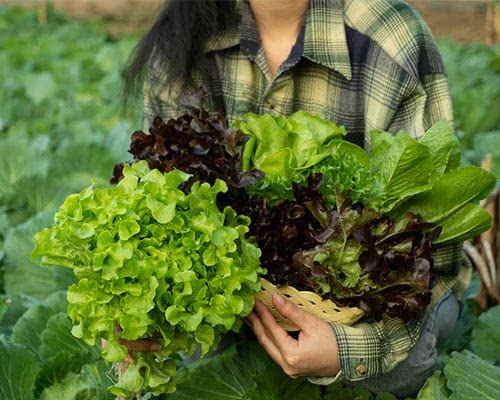
Lettuce and Radishes
If you’re impatient like me, you’ll love this combination.
Radishes mature quickly, often long before lettuce finishes growing. As the radishes are harvested, they create extra room for lettuce to continue developing.
It’s one of the easiest ways to maximize space in a small garden.

Corn and Beans
This pairing has been used for generations.
Corn provides a natural support structure for climbing bean varieties, reducing the need for extra stakes or trellises. Meanwhile, beans help improve soil health by fixing nitrogen.
The result is a productive partnership that benefits both crops.

Cucumbers and Peas
These two enjoy many of the same growing conditions.
Both appreciate consistent moisture and fertile soil. Peas can be grown earlier in the season, and cucumbers often take over once temperatures begin warming up.
The transition feels almost seamless in the garden.

Spinach and Peas
Cool-season vegetables often make excellent companions.
Spinach grows low to the ground while peas climb upward, allowing you to use vertical and horizontal space efficiently. Both enjoy the cooler temperatures of spring and early autumn.
This combination is especially useful for gardeners with limited growing space.

Cabbage and Beets
At first glance these two seem completely different, but they work surprisingly well together.
Cabbage develops large leafy heads above ground while beets grow mostly beneath the soil surface. They occupy different layers of the garden bed, reducing competition.
I’ve used this pairing several times and always appreciate how tidy the beds look.

Bush Beans and Carrots
Bush beans stay relatively compact, making them ideal companions for root crops.
Carrots benefit from the loose soil conditions often created when growing beans. Because they occupy different levels of the garden, they coexist without much competition.

Kale and Beets
Both vegetables tolerate cooler weather and can often be grown together for much of the season.
Kale’s upright growth habit leaves plenty of room for beet roots to develop beneath the soil. The contrast between leafy greens and colorful beet tops also creates a beautiful garden bed.

Peppers and Onions
Peppers appreciate sunny locations and well-draining soil, conditions onions also enjoy.
Because onions have relatively shallow roots, they don’t compete heavily with pepper plants for resources. This makes them a practical pairing in smaller vegetable plots.

Celery and Bush Beans
Celery often benefits from a little extra protection from intense summer heat.
Bush beans can help create a slightly more sheltered environment while still allowing adequate airflow. Since they have different growth habits, they generally coexist quite comfortably.

Zucchini and Corn
This pairing works well in larger garden spaces.
Corn grows vertically while zucchini spreads along the ground, helping cover bare soil and reduce moisture loss. Together they make excellent use of available space.
Just be sure to give both crops enough room to avoid overcrowding later in the season.

Final Thoughts
One of the biggest lessons I’ve learned from gardening is that plants rarely thrive in isolation. The best vegetable gardens feel like small communities where different crops support each other in subtle ways.
You don’t need a huge backyard to make companion planting work either. Even a few well-chosen pairings in raised beds or containers can lead to healthier plants and bigger harvests.
Start with one or two combinations this season and see how they perform in your own garden. You might be surprised by how much easier gardening becomes when your vegetables have the right neighbors.