21 Pebble Garden Path Designs for a Beautiful Backyard
The right garden path can make a backyard feel more inviting, connected, and thoughtfully designed.
Pebbles offer a versatile way to create casual walkways, define planting areas, and add natural texture without overwhelming the surrounding landscape.
From minimalist borders to decorative stepping-stone arrangements, these Pebble Garden Path Designs provide inspiration for gardens of every style and size.
Classic White Pebble Path with Defined Edges

A classic white pebble path brings instant brightness and order to a backyard. The pale stones reflect sunlight, highlight nearby greenery, and create a clean contrast against lawn, mulch, or dark soil.
For the most polished effect, keep the walkway a consistent width and frame it with clearly defined edging made from brick, metal, concrete, or larger natural stones.
This design works especially well beside cottage borders, clipped shrubs, and Mediterranean-style planting. Install a compacted base beneath the pebbles to improve stability, then rake the surface smooth after heavy rain or foot traffic.
Repeating the edging material elsewhere in the garden, such as around a patio or raised bed, helps the path feel intentionally connected to the rest of the landscape.
Stepping Stones Set into Fine Garden Pebbles

Set broad stepping stones into fine garden pebbles to create a relaxed path that feels natural but remains easy to follow.
Choose stones large enough for a comfortable stride, then arrange them with consistent spacing so the route feels deliberate rather than scattered. Soft gray, cream, or warm tan pebbles can be used around the stones to complement the color of nearby walls, fences, or planting containers.
This layout is ideal for connecting a patio with a shed, greenhouse, seating area, or vegetable garden. Keep each stone level and slightly proud of the pebble surface for safer footing.
A narrow edging strip will help hold the smaller stones in place, while low-growing plants, ornamental grasses, or clipped ground cover can soften the transition between the path and surrounding beds.
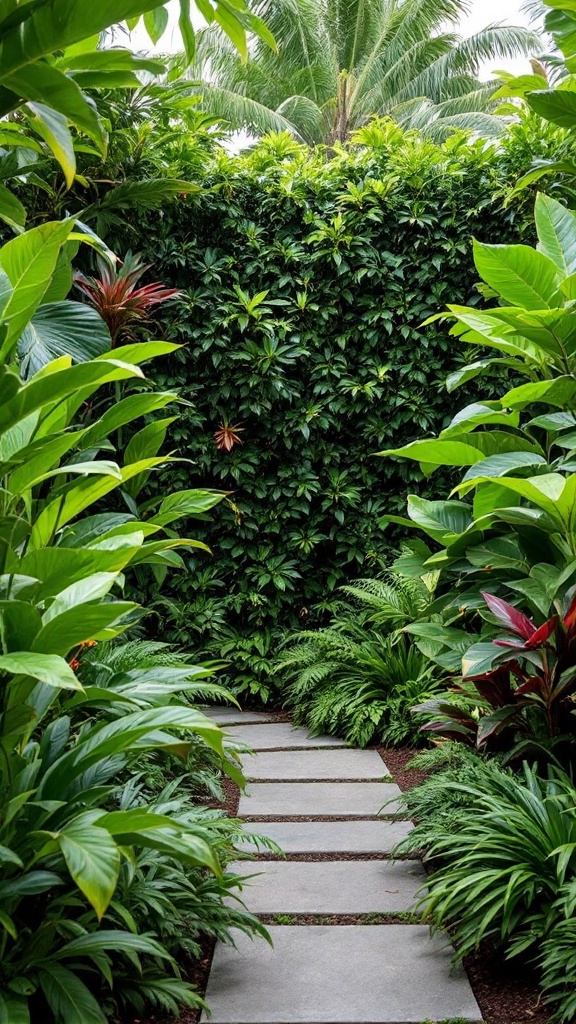
Curved Pebble Walkway Through Lush Planting

A curved pebble walkway creates a more inviting journey through the backyard than a direct straight route.
Gentle bends encourage the eye to move from one planting area to the next, while the loose stone surface blends naturally into foliage. Use the curve to reveal a bench, water feature, tree, or tucked-away seating area rather than showing the entire destination at once.
Surround the path with layered planting for a lush, immersive effect. Combine low ground cover near the edges with taller grasses, shrubs, ferns, or flowering perennials farther back.
Keep the walking line generous through the tightest part of the curve, and use subtle edging where pebbles meet soil. A restrained stone color lets the foliage provide most of the visual drama.
Modern Black Pebble Path with Concrete Slabs

Pairing black pebbles with concrete slabs gives a garden path a crisp, contemporary character. The dark stone creates a dramatic ground plane, while pale or mid-gray slabs provide a clear, comfortable walking surface.
Arrange rectangular slabs in a disciplined rhythm, either in a straight line for a formal route or with slight offsets for a more relaxed modern composition.
This high-contrast combination looks striking beside architectural grasses, clipped evergreen shrubs, bamboo, or simple sculptural containers. Keep the slabs level with one another and set them firmly into a prepared base so they do not rock underfoot.
A slim metal edge can contain the black pebbles and reinforce the minimalist look. Warm lighting placed low along the route will emphasize the geometric pattern after dark.
Rustic Pebble Trail Framed by Timber Borders

A rustic pebble trail feels especially inviting when its edges are defined with weathered timber. Use reclaimed boards, railway sleepers, or chunky landscape timbers to create a relaxed frame that keeps rounded stones from spreading into planting beds.
The warm brown wood adds contrast to gray, cream, or tan pebbles and gives the path a handcrafted character.
For a natural backyard look, let the trail curve gently between grasses, shrubs, and perennial borders rather than following a perfectly straight line. Secure the timber firmly and slightly recess the top edge so it does not become a trip hazard.
A few flat stepping stones can also be added for easier walking while preserving the informal woodland feel.
Mediterranean Path with Terracotta Accents

Bring Mediterranean character to a backyard path by pairing pale pebbles with sun-warmed terracotta. A softly curved walkway can be lined with terracotta pots, urns, or low tile edging filled with lavender, rosemary, thyme, or compact olive trees.
The combination of rounded stone and earthy pottery creates an inviting, holiday-inspired atmosphere without requiring a large garden.
Keep the palette restrained with cream, sandy beige, muted red, and sage green. Place larger pots at turns or near an entrance so they act as visual anchors rather than narrowing the walking route.
A stucco wall, timber gate, gravel courtyard, or simple iron detail will reinforce the Mediterranean mood while allowing the pebble surface to remain the main feature.
Cottage Garden Walkway with Mixed-Color Pebbles

A cottage garden walkway becomes more charming when the pebble surface includes several natural colors instead of one uniform stone. Blend soft gray, cream, honey, and muted brown pebbles to create gentle variation that complements informal planting.
The finished path should feel collected over time, especially when it winds between hydrangeas, roses, lavender, daisies, and spreading ground covers.
Use irregular stepping stones sparingly to provide comfortable footholds while keeping the overall appearance loose and relaxed.
A slightly uneven edge can be softened with creeping thyme or low flowers spilling onto the stones. For a cohesive design, repeat one pebble color in nearby walls, planters, or garden ornaments so the mixed surface feels intentional rather than busy.
Narrow Pebble Path for Side-Yard Access

A narrow pebble path can turn an overlooked side yard into a practical route between the front and back gardens.
Keep the layout straight or gently curving, leaving enough clear width for people to pass comfortably and reach gates, bins, hose reels, or utility areas. Small angular gravel or compactable pebbles create a steadier walking surface than very large rounded stones.
Use the house wall and boundary fence as natural guides, then add discreet edging to prevent stones from migrating into planting beds. Shade-tolerant plants such as ferns, hostas, mondo grass, or climbing vines can soften the corridor without blocking access.
A simple gate, wall-mounted lighting, and a few stepping stones at transitions will make the narrow route feel purposeful and finished.
Wide Pebble Walkway Leading to a Patio

A wide pebble walkway creates a welcoming transition between the lawn, garden beds, and patio. Use smooth river pebbles or compact pea gravel in a generous width so the route feels intentional rather than like a narrow service path.
A broad walkway also makes it easier for two people to walk side by side while carrying drinks, trays, or garden supplies.
For a polished design, keep the surface level with crisp metal, stone, or brick edging. Let the path point directly toward a patio dining area, fire pit, or outdoor sofa so the destination is visible from the start.
Low grasses, clipped shrubs, and flowering perennials can soften the edges without narrowing the walkway.
Circular Pebble Path Around a Garden Feature

A circular pebble path turns a single garden feature into the visual center of the backyard. Create a complete ring around a tree, urn, birdbath, fountain, sculpture, or raised bed, using the curve to encourage visitors to slow down and view the feature from different angles.
This layout is especially useful for awkward corners or open lawn areas that need a stronger focal point.
Keep the circle clean and easy to read by choosing one pebble color and defining the outside edge with steel, brick, or larger stones.
Plant the center with a small ornamental tree or feature low-maintenance gravel, then surround the path with grasses, bulbs, or clipped evergreen shapes for year-round structure.
Pebble Path with Brick or Paver Edging

Brick or paver edging gives a pebble path a finished outline while helping contain loose stones.
The contrast between warm brick, pale pavers, and rounded pebbles works especially well in cottage, traditional, farmhouse, and transitional gardens. Lay the edging flush with the lawn for a neat mowing strip, or raise it slightly to create a stronger border beside planting beds.
Use a straight running bond for a formal look, or follow a gentle curve for a softer garden path.
Choose pebble colors that relate to the brick or pavers so the materials feel connected. Repeating the same edging around nearby beds, patios, or steps will make the entire backyard look more cohesive.
Zen-Inspired Path with Large Flat Stones

Combine small pebbles with large flat stepping stones to create a Zen-inspired path that feels calm, deliberate, and easy to follow.
Choose broad stones with natural shapes and place them at comfortable walking intervals, keeping the tops level with the surrounding pebble surface. Gray, charcoal, cream, and muted brown stones work well with restrained planting and simple garden architecture.
Complete the scene with raked gravel, moss, bamboo, ornamental grasses, clipped shrubs, or a single stone lantern.
Avoid overcrowding the route with too many colors or decorations. The strongest designs leave plenty of open space around each stone, allowing the pattern, texture, and rhythm of the path to become the main visual focus.
Pebble Mosaic Path with Decorative Patterns

Turn a simple walkway into a piece of garden art with a pebble mosaic path. Arrange smooth stones in repeating spirals, sunbursts, waves, stars, or floral motifs to create a design that rewards close attention.
Dark pebbles can outline lighter shapes, while warm terracotta, gray, cream, and blue stones add subtle color.
For the clearest pattern, keep the surrounding planting relatively simple and use a firm, level base beneath the pebbles.
A narrow mosaic border can decorate an everyday path, while a circular design makes a striking destination near a seating area, fountain, or courtyard entrance.
Woodland Walkway Using Natural River Pebbles

A woodland walkway made with natural river pebbles blends beautifully beneath trees, ferns, grasses, and shade-loving perennials.
Choose rounded stones in muted gray, tan, brown, and charcoal tones so the path feels gathered from the landscape rather than placed on top of it. A gently curving route creates a more natural, exploratory mood.
Soften the edges with moss, leaf litter, logs, or irregular larger rocks. Keep the route slightly wider near benches or quiet viewing spots, and allow parts of the path to disappear behind foliage.
River pebbles also provide useful drainage in damp areas while maintaining the relaxed character of a woodland garden.
Pebble Path Between Raised Garden Beds

Place a pebble path between raised garden beds to create a practical, tidy route for planting, watering, and harvesting.
The narrow corridor keeps soil and mulch from being tracked across the yard, while the loose surface helps rain drain away from the bed edges. Choose small, compactable pebbles that are comfortable and stable underfoot.
Define both sides with timber, brick, stone, or metal edging so the path stays crisp as the beds mature.
A straight layout suits vegetable gardens and formal planting grids, while a slightly wider central junction can provide room for a wheelbarrow or a small bench. Repeat the pebble color elsewhere to unify the backyard.
Color-Coordinated Pebbles for a Contemporary Yard

Use color-coordinated pebbles to give a contemporary yard a deliberate, architectural finish. Pair charcoal or black stones with pale gray, white, or warm beige pebbles to create clean bands, framed borders, or simple geometric blocks.
The restrained palette looks especially effective beside concrete, steel edging, timber screens, and angular planting beds.
For a polished result, repeat one pebble color in nearby containers, paving, or exterior walls. Keep the stone size fairly uniform and separate contrasting areas with crisp edging.
A light pebble path can brighten a shaded courtyard, while darker stones provide a dramatic backdrop for silver foliage, sculptural grasses, and modern architectural plants.
Low-Maintenance Path with Landscape Fabric

A low-maintenance pebble path starts with a dependable layer beneath the stones. After excavating the route and leveling the soil, install landscape fabric or geotextile membrane across the entire walkway.
Overlap the seams, secure the edges with landscape staples, and cover the fabric completely with a compacted base and a generous layer of decorative pebbles.
Finish the design with rigid edging made from steel, timber, brick, or stone to keep the pebbles contained.
Choose rounded gravel in a consistent color so the path looks intentional and stays visually tidy. The fabric will not eliminate every maintenance task, but it can reduce weed growth, prevent soil from mixing with the stones, and make seasonal raking and topping up much easier.
Pebble Walkway Illuminated by Solar Lights

Solar lighting can make a pebble walkway feel welcoming after sunset while improving visibility along the route.
Place small stake lights at regular intervals beside the path rather than directly in the walking surface. For a softer effect, choose warm-white fixtures with discreet finishes that blend into planting beds, gravel borders, or natural stone edging.
Keep the pebble surface level and firmly contained so the lighting remains the feature.
A gently curving walkway looks especially attractive when the lights follow its shape and reveal the texture of the stones. Before installing, check that each light receives several hours of direct sun, and leave enough space between fixtures to create an even glow instead of a harsh, overlit corridor.
Layered Path Combining Pebbles and Ground Covers

A layered pebble path feels more natural when hardscape and living plants are allowed to overlap.
Use a central strip of compacted pebbles for dependable footing, then soften the edges with low-growing ground covers such as creeping thyme, woolly thyme, sedum, or Irish moss. You can also place broad stepping stones through the pebble layer and let plants fill selected gaps.
Keep the planting pattern loose rather than perfectly symmetrical. Small pockets of greenery breaking into the gravel make the walkway look established and help it blend into surrounding beds.
Select plants suited to the path’s sunlight, drainage, and foot traffic, and leave enough open pebble surface for comfortable walking and easy access during maintenance.
Compact Pebble Path for a Small Backyard

A compact pebble path can add structure to a small backyard without overwhelming the available space. Keep the route narrow but comfortable, usually wide enough for one person, and use a simple line or shallow curve to connect a patio, shed, gate, or seating area.
Light-colored pebbles can brighten the space, while a dark border or a few larger stepping stones provide definition.
Make the design feel intentional by repeating the same pebble color in nearby beds or containers. Rigid edging will prevent stones from spreading into planting areas, and a compacted base will help the path remain level.
Avoid adding too many materials or sharp turns; a restrained palette and clear destination will make the backyard feel larger and easier to navigate.
Accessible Pebble Path with a Firm Walking Surface

Make a pebble-style garden path more accessible by choosing small, angular aggregate that locks together when compacted instead of loose, rounded pea gravel.
A properly prepared base of crushed stone, followed by a thin layer of fine pebbles or self-binding gravel, creates a firmer surface for walking aids, pushchairs, and larger wheelchair wheels.
Keep the route broad, level, and gently curved, with sturdy edging to prevent stones from shifting into planting beds.
A resin-bound finish is another option when you want the natural texture of pebbles with a smoother, more reliable walking surface. Add generous turning space near seating areas, gates, and raised beds.
Whether you prefer a relaxed cottage look, a sleek contemporary layout, or a natural woodland feel, pebble paths can bring both function and character to your backyard.
Choose materials that complement your home and planting scheme, define the route with practical edging, and plan for a stable surface that remains comfortable to walk on. With the right design, a pebble garden path can become one of the most memorable features in your outdoor space.